Thermal Mass Benefits: How a Stone Facade Contributes to Energy Efficiency
Thermal Mass Benefits: How a Stone Facade Contributes to Energy Efficiency
Thermal mass benefits make a stone facade far more than an aesthetic decision. For homeowners and developers in the United States and Canada, energy efficiency has become a central consideration in building design. Heating and cooling costs, sustainability goals, and long‑term operational efficiency all influence material choices.
Natural stone—particularly European limestone—offers an often overlooked advantage: thermal mass. This physical property allows stone to absorb, store, and gradually release heat, stabilizing indoor temperatures and reducing energy demand.
For rational buyers evaluating the cost of a limestone facade, understanding thermal mass reveals that stone contributes not only to architectural prestige, but also to long-term energy performance.
What Is Thermal Mass?
Thermal mass refers to a material’s ability to absorb heat energy, store it, and release it slowly over time.
Dense materials with high mass—such as natural stone, concrete, and brick—possess significant thermal mass. Lightweight materials such as vinyl siding, metal panels, or EIFS systems have very little.
The physics is straightforward:
- During the day, stone absorbs solar heat rather than immediately transmitting it indoors.
- As temperatures drop, the stone releases stored heat gradually.
- This process reduces temperature swings inside the building.
Mathematically, the heat storage capacity of a material can be approximated by:
Q=m⋅c⋅ΔT Q = m \cdot c \cdot \Delta T
Where:
- QQ = heat stored
- mm = mass of the material
- cc = specific heat capacity
- ΔT\Delta T = temperature change
Because natural limestone is dense and massive, it stores significantly more heat than thin facade systems.
Why Thermal Mass Matters in Building Performance
Modern energy-efficient design increasingly focuses on temperature stability, not just insulation.
While insulation slows heat transfer, thermal mass regulates temperature fluctuations.
Buildings with high thermal mass experience:
- reduced daytime overheating
- slower nighttime heat loss
- lower HVAC cycling frequency
- improved occupant comfort
Instead of the interior temperature rising and falling quickly with outdoor conditions, the building envelope acts as a thermal buffer.
This buffering effect reduces the workload on mechanical heating and cooling systems.
 The Role of Limestone in a High‑Performance Facade
 The Role of Limestone in a High‑Performance Facade
European limestone performs particularly well as a facade material due to its combination of density, durability, and thermal stability.
When used in exterior wall assemblies—especially ventilated rainscreen systems—limestone contributes to energy efficiency in several ways:
1. Heat Absorption During Peak Sun
During sunny periods, limestone absorbs solar radiation rather than allowing it to penetrate directly into the building envelope.
This delays heat transfer to the interior.
The result: reduced midday cooling loads.
2. Gradual Heat Release
After sunset, the stone slowly releases stored heat into the surrounding environment.
This moderates nighttime temperature drops around the facade and can slightly stabilize interior conditions.
In climates with large day‑night temperature differences, this effect becomes particularly valuable.
3. Thermal Buffering of the Building Envelope
Stone cladding also acts as a protective outer thermal layer, shielding the structural wall behind it from rapid environmental temperature changes.
This buffering effect helps protect insulation layers and structural components from thermal stress.
Over time, this contributes to durability as well as energy efficiency.
Climate Advantages in the United States and Canada
Thermal mass benefits vary depending on climate conditions, but across North America they provide consistent advantages.
Northern and Cold Climates
In regions with cold winters—such as Canada and northern U.S. states—limestone facades help stabilize interior temperatures by slowing heat loss.
During sunny winter days, the stone absorbs solar heat that can later be released gradually.
Temperate Climates
In moderate climates, thermal mass reduces daily temperature fluctuations, improving comfort and reducing HVAC demand throughout the year.
Hotter Regions
In warmer climates, stone delays heat transfer into the building during peak daytime temperatures, reducing cooling loads when energy demand is highest.
This delay effect—known as thermal lag—can shift heat gain until later in the evening when outdoor temperatures are lower.
Integration with Modern Rainscreen Systems
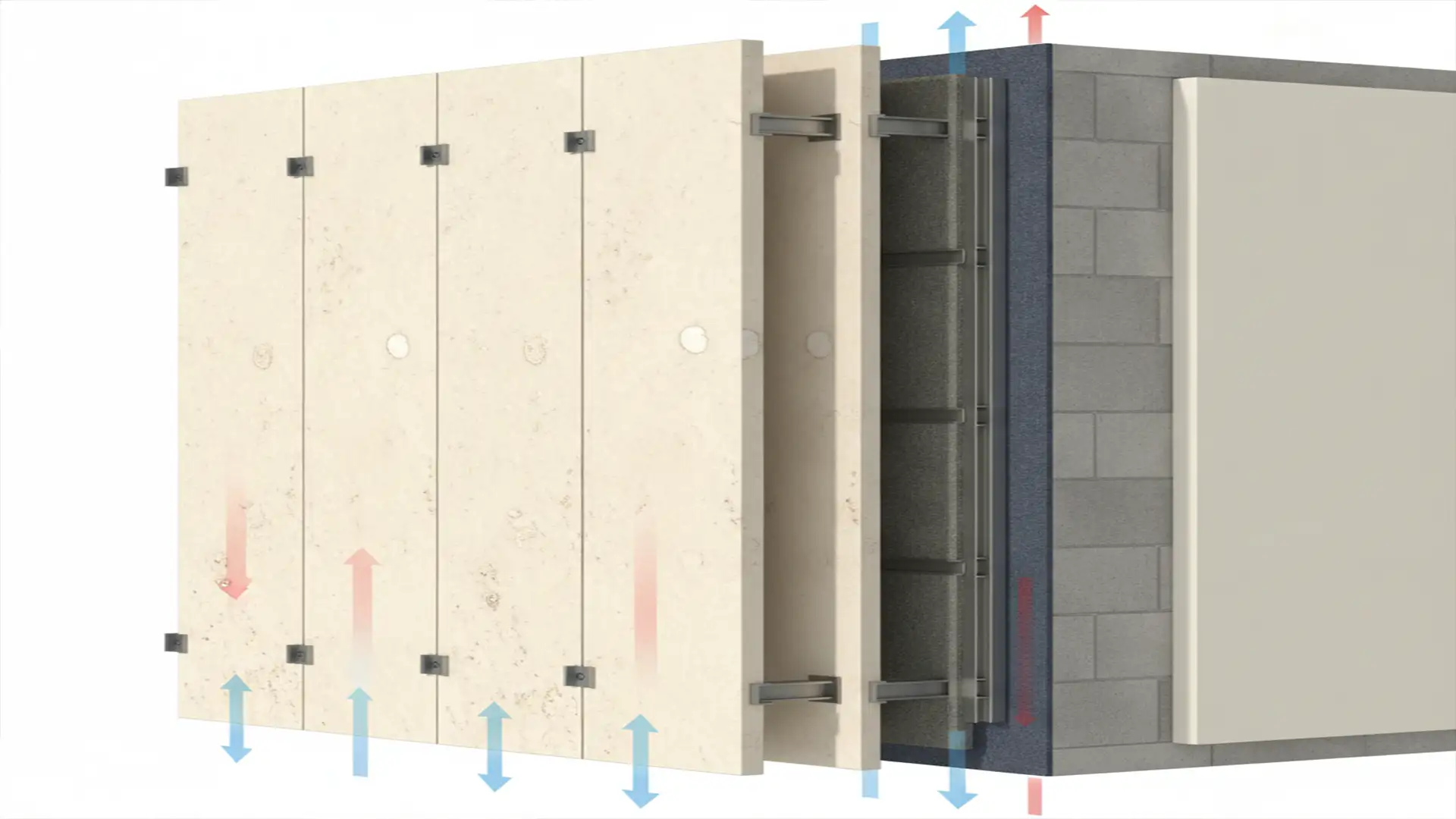
Most contemporary limestone facades are installed using ventilated rainscreen assemblies, which enhance the energy performance of the wall.
A typical high-performance system includes:
- exterior European limestone cladding
- ventilated air cavity
- waterproof barrier
- structural wall
- insulation layer
The ventilated cavity allows air circulation behind the stone, helping remove heat and moisture before they reach the interior wall.
This combination of thermal mass + ventilation + insulation creates a highly stable building envelope.
Reduced HVAC Demand and Operational Costs
Because limestone facades moderate temperature swings, they reduce the frequency and intensity of HVAC system operation.
This leads to several measurable benefits:
- lower peak cooling demand
- reduced heating energy consumption
- improved indoor comfort stability
- decreased mechanical system wear
For large homes, luxury estates, and commercial developments, these improvements can translate into meaningful long-term operational savings.
Over the lifespan of a building, the energy performance benefits help offset the initial investment in natural stone.
Sustainability and Long-Term Environmental Value
Energy efficiency is only one component of sustainability. Material longevity is equally important.
Limestone contributes to sustainability through:
- extremely long service life
- minimal replacement cycles
- low maintenance requirements
- reduced renovation waste
A facade material that lasts for generations reduces the environmental impact associated with repeated facade replacements.
Combined with thermal performance benefits, limestone supports both energy efficiency and long-term sustainability goals.
Why Developers Value High‑Performance Facades
For developers targeting the luxury residential market, building performance increasingly influences buyer decisions.
Energy-efficient homes are perceived as:
- higher quality
- technologically advanced
- environmentally responsible
- less expensive to operate long-term
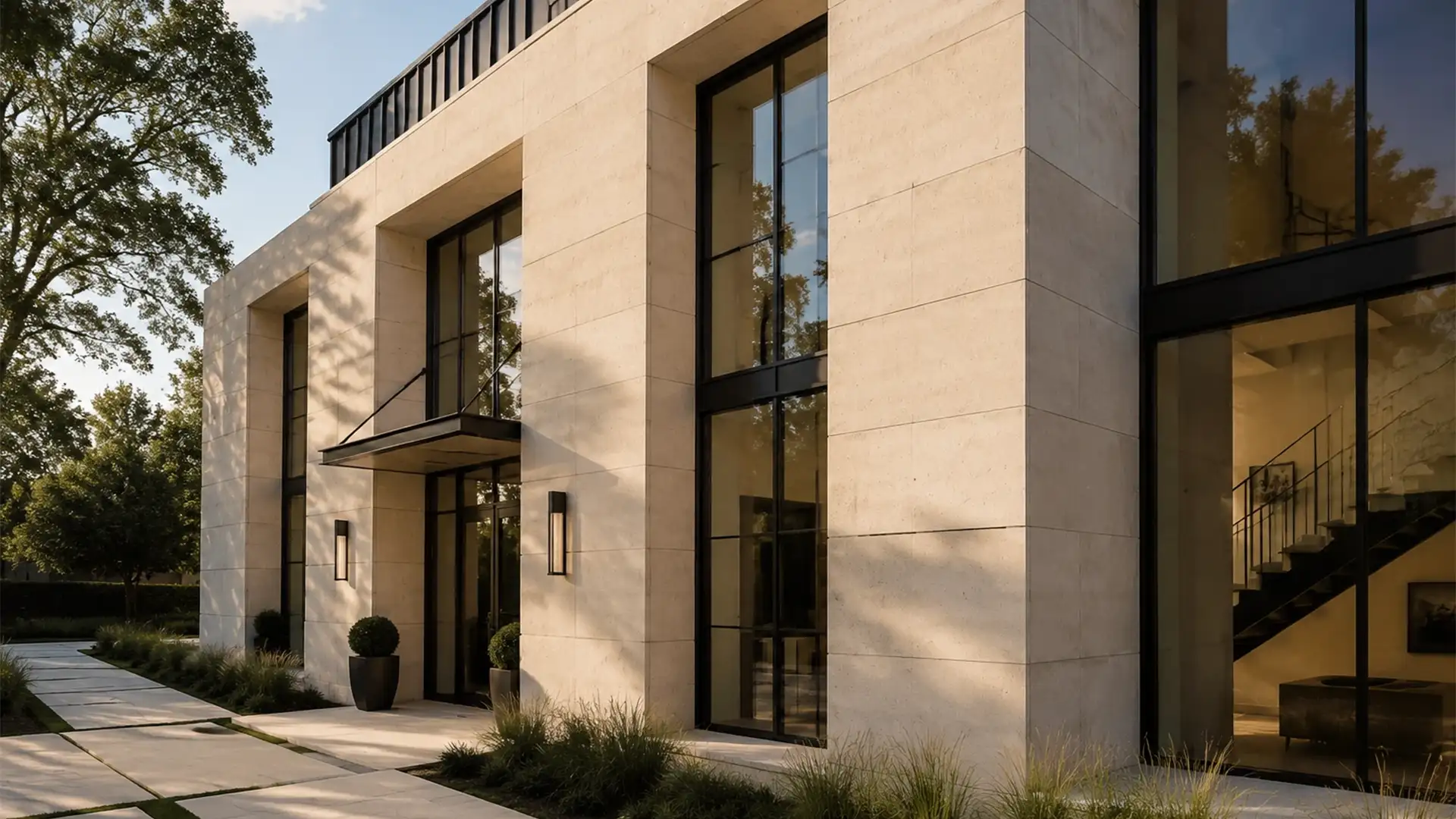
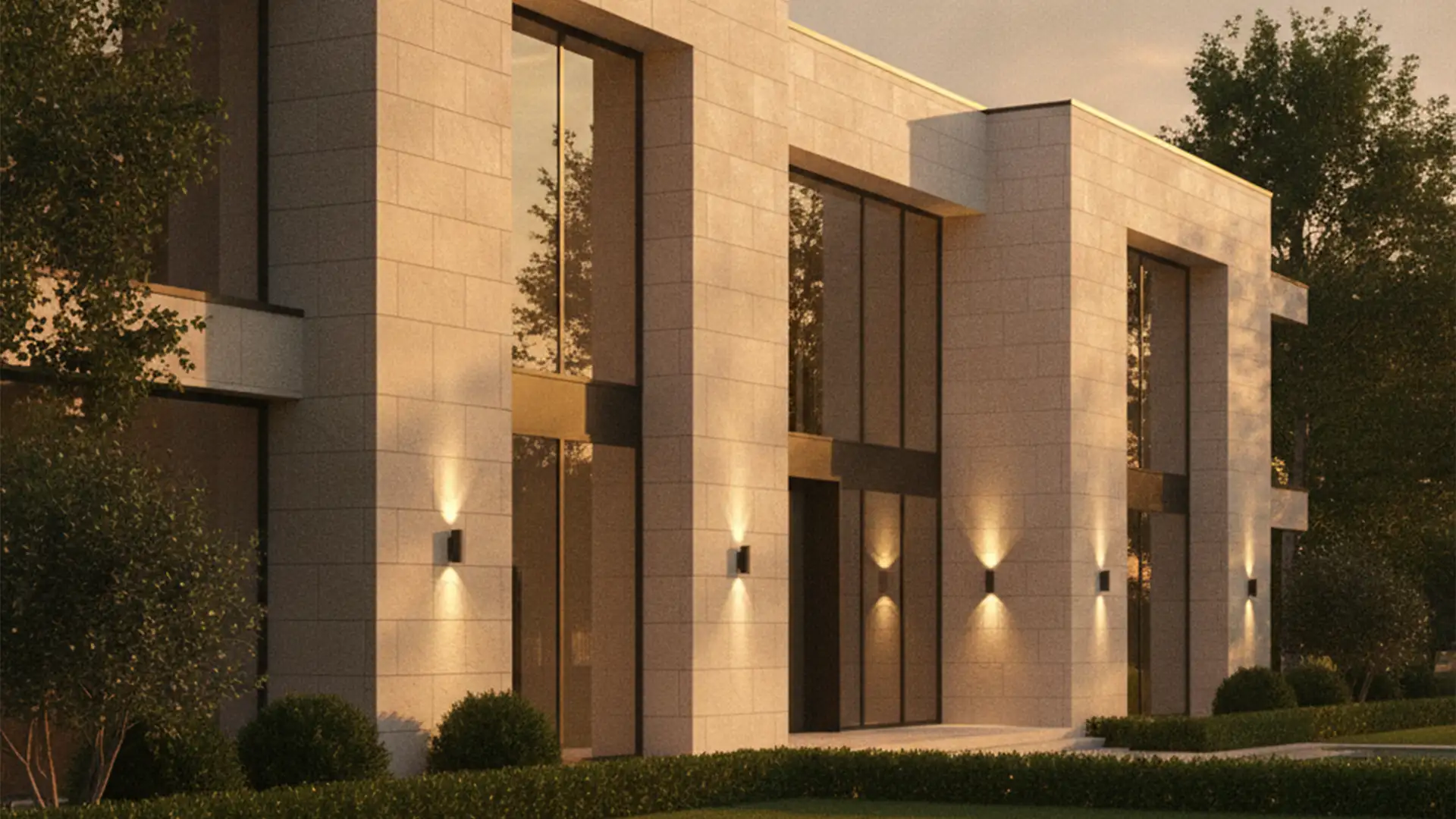
A limestone facade communicates architectural prestige while also contributing to these performance expectations.
This combination—beauty, durability, and energy performance—helps differentiate high-end properties in competitive real estate markets.
Conclusion: Beauty with Functional Performance
The thermal mass benefits of a stone facade demonstrate that limestone is more than an architectural statement—it is a performance material.
By absorbing, storing, and gradually releasing heat, limestone stabilizes building temperatures, reduces HVAC demand, and contributes to long-term energy efficiency.
For homeowners and developers seeking both aesthetic excellence and rational cost justification, European limestone offers a rare combination: timeless architectural beauty paired with measurable building performance.
At Marvelous Marble, our limestone facade systems are designed not only to create visually striking architecture but also to support the long-term performance and efficiency expectations of modern North American buildings.
Thermal mass benefits make a stone facade far more than an aesthetic decision. For homeowners and developers in the United States and Canada, energy efficiency has become a central consideration in building design. Heating and cooling costs, sustainability goals, and long‑term operational efficiency all influence material choices.
Natural stone—particularly European limestone—offers an often overlooked advantage: thermal mass. This physical property allows stone to absorb, store, and gradually release heat, stabilizing indoor temperatures and reducing energy demand.
For rational buyers evaluating the cost of a limestone facade, understanding thermal mass reveals that stone contributes not only to architectural prestige, but also to long-term energy performance.
What Is Thermal Mass?
Thermal mass refers to a material’s ability to absorb heat energy, store it, and release it slowly over time.
Dense materials with high mass—such as natural stone, concrete, and brick—possess significant thermal mass. Lightweight materials such as vinyl siding, metal panels, or EIFS systems have very little.
The physics is straightforward:
- During the day, stone absorbs solar heat rather than immediately transmitting it indoors.
- As temperatures drop, the stone releases stored heat gradually.
- This process reduces temperature swings inside the building.
Mathematically, the heat storage capacity of a material can be approximated by:
Q=m⋅c⋅ΔT Q = m \cdot c \cdot \Delta T
Where:
- QQ = heat stored
- mm = mass of the material
- cc = specific heat capacity
- ΔT\Delta T = temperature change
Because natural limestone is dense and massive, it stores significantly more heat than thin facade systems.
Why Thermal Mass Matters in Building Performance
Modern energy-efficient design increasingly focuses on temperature stability, not just insulation.
While insulation slows heat transfer, thermal mass regulates temperature fluctuations.
Buildings with high thermal mass experience:
- reduced daytime overheating
- slower nighttime heat loss
- lower HVAC cycling frequency
- improved occupant comfort
Instead of the interior temperature rising and falling quickly with outdoor conditions, the building envelope acts as a thermal buffer.
This buffering effect reduces the workload on mechanical heating and cooling systems.
The Role of Limestone in a High‑Performance Facade
European limestone performs particularly well as a facade material due to its combination of density, durability, and thermal stability.
When used in exterior wall assemblies—especially ventilated rainscreen systems—limestone contributes to energy efficiency in several ways:
1. Heat Absorption During Peak Sun
During sunny periods, limestone absorbs solar radiation rather than allowing it to penetrate directly into the building envelope.
This delays heat transfer to the interior.
The result: reduced midday cooling loads.
2. Gradual Heat Release
After sunset, the stone slowly releases stored heat into the surrounding environment.
This moderates nighttime temperature drops around the facade and can slightly stabilize interior conditions.
In climates with large day‑night temperature differences, this effect becomes particularly valuable.
3. Thermal Buffering of the Building Envelope
Stone cladding also acts as a protective outer thermal layer, shielding the structural wall behind it from rapid environmental temperature changes.
This buffering effect helps protect insulation layers and structural components from thermal stress.
Over time, this contributes to durability as well as energy efficiency.
Climate Advantages in the United States and Canada
Thermal mass benefits vary depending on climate conditions, but across North America they provide consistent advantages.
Northern and Cold Climates
In regions with cold winters—such as Canada and northern U.S. states—limestone facades help stabilize interior temperatures by slowing heat loss.
During sunny winter days, the stone absorbs solar heat that can later be released gradually.
Temperate Climates
In moderate climates, thermal mass reduces daily temperature fluctuations, improving comfort and reducing HVAC demand throughout the year.
Hotter Regions
In warmer climates, stone delays heat transfer into the building during peak daytime temperatures, reducing cooling loads when energy demand is highest.
This delay effect—known as thermal lag—can shift heat gain until later in the evening when outdoor temperatures are lower.
Integration with Modern Rainscreen Systems
Most contemporary limestone facades are installed using ventilated rainscreen assemblies, which enhance the energy performance of the wall.
A typical high-performance system includes:
- exterior European limestone cladding
- ventilated air cavity
- waterproof barrier
- structural wall
- insulation layer
The ventilated cavity allows air circulation behind the stone, helping remove heat and moisture before they reach the interior wall.
This combination of thermal mass + ventilation + insulation creates a highly stable building envelope.
Reduced HVAC Demand and Operational Costs
Because limestone facades moderate temperature swings, they reduce the frequency and intensity of HVAC system operation.
This leads to several measurable benefits:
- lower peak cooling demand
- reduced heating energy consumption
- improved indoor comfort stability
- decreased mechanical system wear
For large homes, luxury estates, and commercial developments, these improvements can translate into meaningful long-term operational savings.
Over the lifespan of a building, the energy performance benefits help offset the initial investment in natural stone.
Sustainability and Long-Term Environmental Value
Energy efficiency is only one component of sustainability. Material longevity is equally important.
Limestone contributes to sustainability through:
- extremely long service life
- minimal replacement cycles
- low maintenance requirements
- reduced renovation waste
A facade material that lasts for generations reduces the environmental impact associated with repeated facade replacements.
Combined with thermal performance benefits, limestone supports both energy efficiency and long-term sustainability goals.
Why Developers Value High‑Performance Facades
For developers targeting the luxury residential market, building performance increasingly influences buyer decisions.
Energy-efficient homes are perceived as:
- higher quality
- technologically advanced
- environmentally responsible
- less expensive to operate long-term
A limestone facade communicates architectural prestige while also contributing to these performance expectations.
This combination—beauty, durability, and energy performance—helps differentiate high-end properties in competitive real estate markets.
Conclusion: Beauty with Functional Performance
The thermal mass benefits of a stone facade demonstrate that limestone is more than an architectural statement—it is a performance material.
By absorbing, storing, and gradually releasing heat, limestone stabilizes building temperatures, reduces HVAC demand, and contributes to long-term energy efficiency.
For homeowners and developers seeking both aesthetic excellence and rational cost justification, European limestone offers a rare combination: timeless architectural beauty paired with measurable building performance.
At Marvelous Marble, our limestone facade systems are designed not only to create visually striking architecture but also to support the long-term performance and efficiency expectations of modern North American buildings.

Related Posts
Specifying Limestone Façades for Freeze–Thaw Climates: An Architect’s Guide
A technical planning guide for luxury limestone façades in New York, Chicago…