Does a Limestone Facade Need Maintenance? A Guide to Long-Term Care
Does a Limestone Facade Need Maintenance? A Guide to Long-Term Care
Does a limestone facade need maintenance? This is one of the most common—and most rational—questions homeowners and developers ask during the design phase. When investing in a premium natural material like European limestone, decision-makers want clarity on lifecycle costs, upkeep requirements, and long-term performance.
The short answer is: yes, limestone requires maintenance—but far less than most people assume, and significantly less intervention than many alternative facade systems over the long term.
The key is understanding the difference between maintenance, repair, and failure prevention. When properly designed and installed, a limestone facade is one of the most stable, durable, and low-intervention exterior materials available in the United States and Canada.
Let’s break this down with precision.
1. Understanding Limestone as a Building Envelope Material
Natural limestone is a dense sedimentary stone formed over millions of years. When properly quarried, tested, and specified for exterior use, it performs exceptionally well in residential and estate-scale construction.
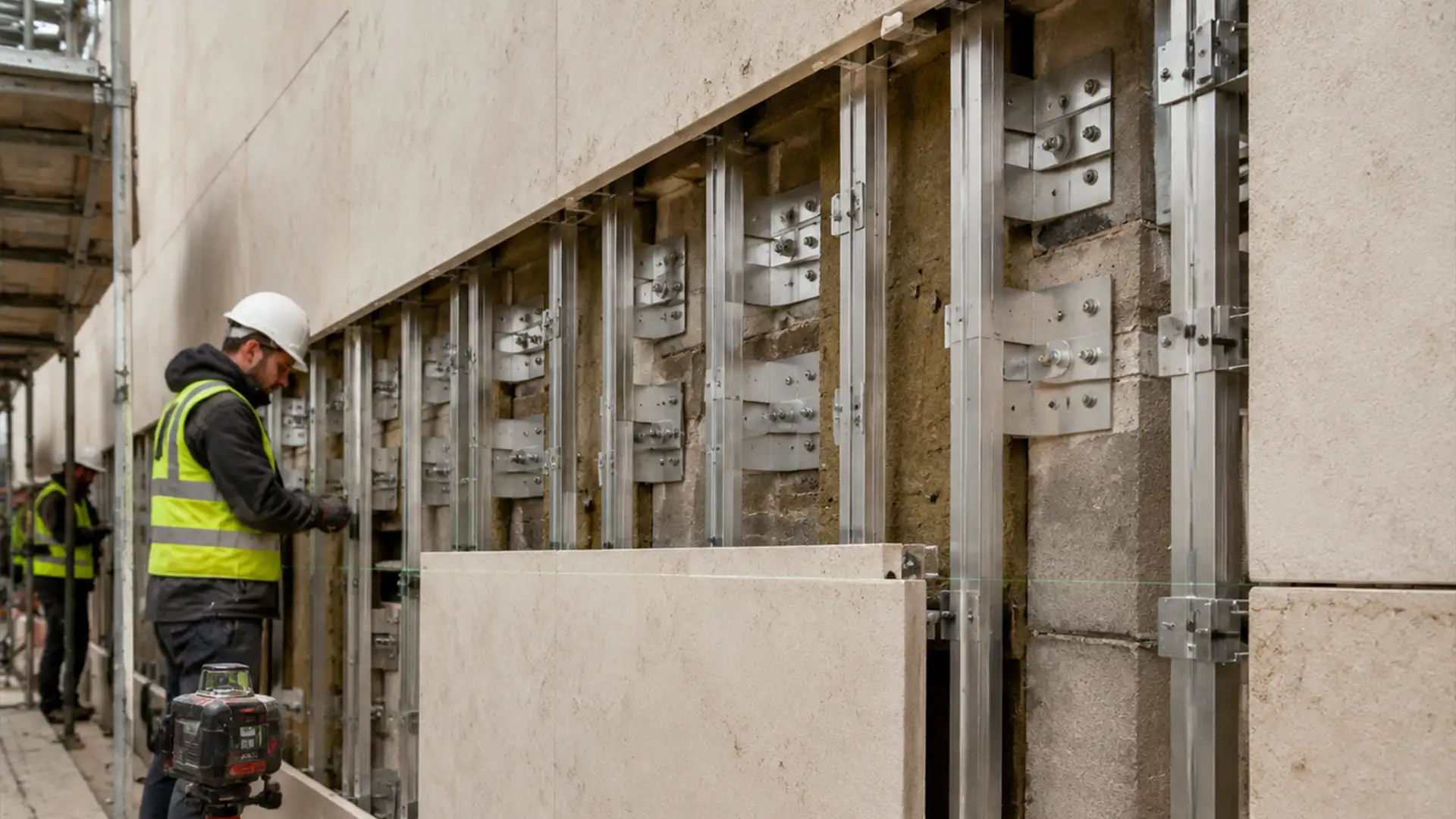
A correctly engineered limestone facade typically includes:
- Mechanically anchored stone panels or blocks
- Ventilated rainscreen cavity (in modern systems)
- Proper flashing and drainage detailing
- Engineered expansion considerations
- Professional installation with calibrated tolerances
When these fundamentals are executed correctly, the facade is inherently stable. What remains is routine care—not structural concern.
2. Routine Maintenance: What Is Actually Required?
For high-end homeowners and developers evaluating cost justification, it’s important to understand what realistic maintenance looks like.
A. Periodic Cleaning (Every 2–5 Years, Depending on Environment)
In most residential environments:
- Light atmospheric dust can be removed with low-pressure water washing.
- In urban settings, occasional gentle cleaning may be recommended.
- Organic buildup (if present) can be addressed with stone-safe cleaners.
Importantly:
- No harsh chemicals
- No aggressive pressure washing
- No abrasive treatments
Natural limestone responds best to soft, controlled cleaning.
In many suburban or estate properties, simple rinsing is sufficient to maintain a fresh appearance.
B. Annual Visual Inspection
This is often overlooked but extremely valuable.
An annual inspection should review:
- Sealant joints around windows and transitions
- Flashing integrity
- Drainage performance
- Any minor movement in joints
This is not “stone maintenance” in the sense of material degradation. It is standard envelope inspection—something any high-value home should undergo regardless of facade material.
C. Optional Sealing (Project-Dependent)
Not all limestone facades require sealing.
In fact:
- Many high-quality European limestones perform excellently without surface sealers.
- Breathability is often preferable to heavy sealing systems.
However, in certain climates or design conditions, a breathable penetrating sealer may be applied to:
- Reduce staining potential
- Improve water repellency
- Simplify maintenance cycles
This is typically a low-frequency treatment—not an annual requirement.
3. How Limestone Ages: Patina vs. Deterioration
One of the greatest misconceptions about limestone is confusion between natural patina and damage.
Natural Patina
Over time, limestone may:
- Develop subtle tonal softening
- Show minor atmospheric interaction
- Deepen slightly in character
This is not deterioration—it is material evolution. Many architects consider this part of limestone’s aesthetic strength.
True Maintenance Concerns
Actual concerns are typically related to:
- Improper installation
- Water management failures
- Adjacent material staining
- Poor detailing at transitions
In well-executed projects, these risks are minimized from day one.
4. Comparing Limestone Maintenance to Other Facade Systems
For rational buyers evaluating cost justification, the more relevant question is:
Compared to what?
Stucco or EIFS
- Prone to cracking
- Requires repainting
- Susceptible to moisture-related issues
Painted Siding Systems
- Regular repainting cycles
- Color fading
- Impact damage
Metal Panels
- Surface oxidation (depending on type)
- Denting
- Finish wear over time
Cast Stone (Precast)
- Potential hairline cracking
- Patchy discoloration
- More noticeable aging irregularities
Natural Limestone
- No repainting
- No artificial finish layers
- No delamination
- No applied coating to peel
- Ages organically rather than cosmetically
When evaluated over a 20–40 year lifecycle, limestone often proves to be one of the lowest-intervention premium materials available.
5. Climate Considerations in the U.S. and Canada
North American climates range from humid coastal zones to freeze-thaw regions and dry continental environments.
Properly specified limestone can perform well in all of these conditions when:
- The stone grade is tested and appropriate for freeze-thaw exposure
- Anchoring systems accommodate movement
- Drainage and flashing are correctly detailed
- Installation tolerances are respected
In cold climates, the most important factor is moisture management, not the stone itself.
A ventilated rainscreen system dramatically reduces risk by allowing air movement behind the stone, preventing trapped moisture from causing long-term stress.
6. What Causes Problems in Limestone Facades?
When issues arise, they are almost never due to “limestone being high maintenance.” They are typically linked to:
- Poor detailing at parapets or window heads
- Inadequate drainage design
- Inferior anchoring systems
- Improper stone selection
- Low-quality installation workmanship
In other words, problems stem from system design—not from the inherent nature of the material.
For developers, this highlights a critical point: selecting experienced stone specialists during the design phase dramatically reduces lifecycle risk.
7. Long-Term Cost Perspective
Let’s address the financial logic directly.
When evaluating limestone facade maintenance over 30+ years:
Costs Typically Include:
- Periodic light cleaning
- Occasional sealant joint replacement
- Routine inspection
Costs Typically Avoided:
- Repainting cycles
- Surface refinishing
- Cladding replacement
- Frequent cosmetic correction
- Full facade refresh to maintain luxury appearance
For high-end estates and developments, the absence of repainting alone can represent a significant lifecycle savings.
More importantly, limestone retains visual credibility. It rarely needs aesthetic “updating” because it does not rely on color trends or applied coatings.
8. The Value of Low Intervention in Luxury Real Estate
In luxury markets, perception matters as much as performance.
A facade that:
- Maintains its tone and integrity
- Ages with dignity
- Does not require cosmetic refresh every decade
- Signals permanence and stability
creates long-term brand equity for the property.
Developers especially benefit from this. Properties built with authentic limestone often maintain stronger prestige positioning over time compared to facade systems that visibly age or require periodic reinvestment.
9. Best Practices for Minimal Maintenance
For those in the design phase, here is the strategic approach:
- Select high-quality, climate-appropriate limestone.
- Design a proper rainscreen system.
- Coordinate early between architect, engineer, and stone fabricator.
- Ensure precision installation.
- Conduct simple annual envelope inspections.
When these five steps are respected, limestone facades become remarkably low-maintenance for decades.
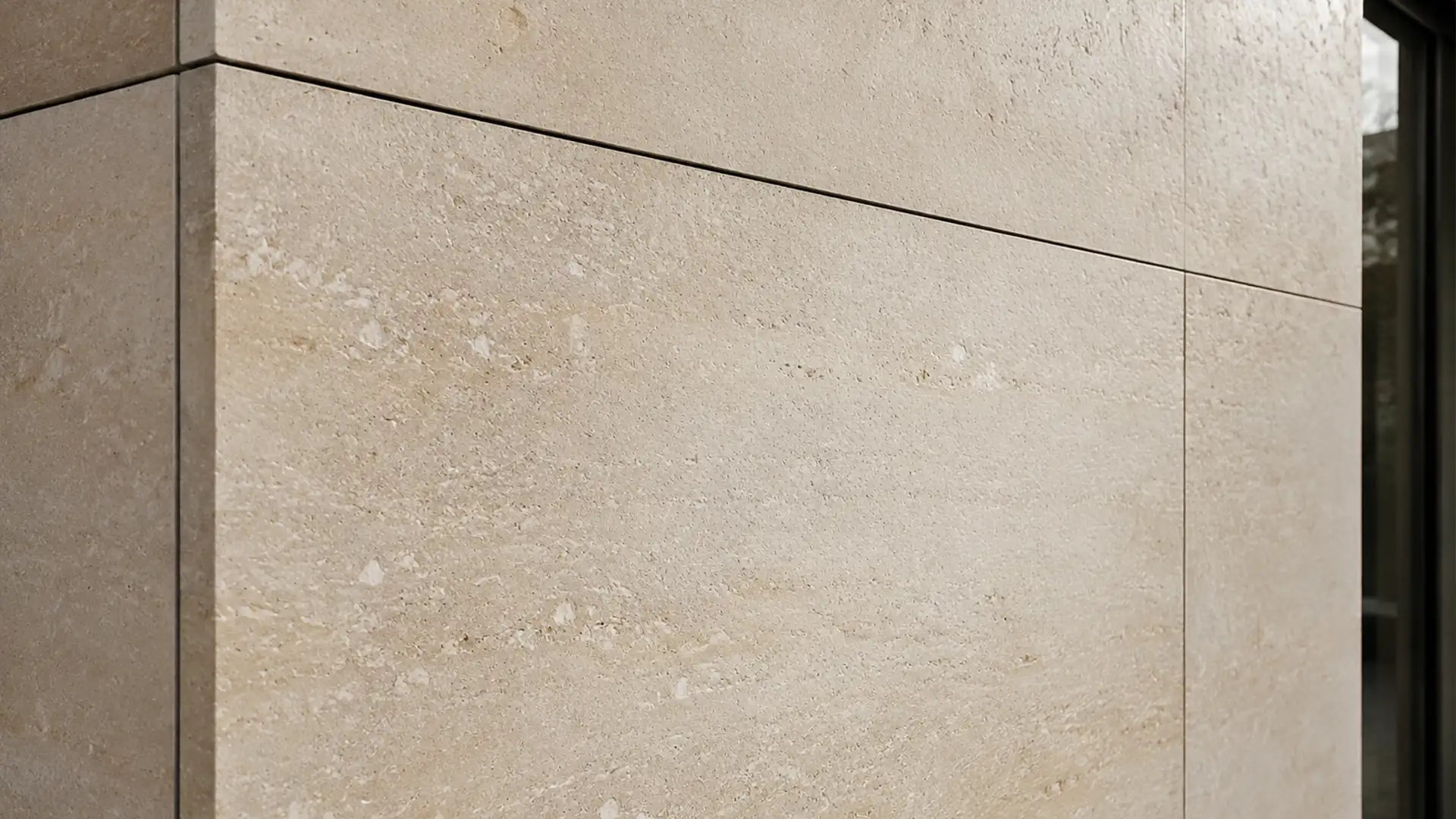
Conclusion: Is Limestone High Maintenance?
Does a limestone facade need maintenance? Yes—but in the way a high-performance architectural system requires responsible ownership, not in the way fragile or synthetic materials demand constant attention.
In reality:
- It does not need repainting.
- It does not peel.
- It does not rely on artificial surface coatings.
- It ages naturally.
- It maintains architectural credibility over time.
For rational buyers and developers, the premium cost of natural limestone is not offset by excessive upkeep. Instead, it is justified by longevity, reduced lifecycle intervention, and sustained luxury positioning.
A limestone facade is not a short-term finish. It is a long-term architectural asset.
At Marvelous Marble, we guide clients through proper specification and detailing to ensure that their investment remains structurally sound, visually powerful, and remarkably low-maintenance for generations.
Does a limestone facade need maintenance? This is one of the most common—and most rational—questions homeowners and developers ask during the design phase. When investing in a premium natural material like European limestone, decision-makers want clarity on lifecycle costs, upkeep requirements, and long-term performance.
The short answer is: yes, limestone requires maintenance—but far less than most people assume, and significantly less intervention than many alternative facade systems over the long term.
The key is understanding the difference between maintenance, repair, and failure prevention. When properly designed and installed, a limestone facade is one of the most stable, durable, and low-intervention exterior materials available in the United States and Canada.
Let’s break this down with precision.
1. Understanding Limestone as a Building Envelope Material
Natural limestone is a dense sedimentary stone formed over millions of years. When properly quarried, tested, and specified for exterior use, it performs exceptionally well in residential and estate-scale construction.
A correctly engineered limestone facade typically includes:
- Mechanically anchored stone panels or blocks
- Ventilated rainscreen cavity (in modern systems)
- Proper flashing and drainage detailing
- Engineered expansion considerations
- Professional installation with calibrated tolerances
When these fundamentals are executed correctly, the facade is inherently stable. What remains is routine care—not structural concern.
2. Routine Maintenance: What Is Actually Required?
For high-end homeowners and developers evaluating cost justification, it’s important to understand what realistic maintenance looks like.
A. Periodic Cleaning (Every 2–5 Years, Depending on Environment)
In most residential environments:
- Light atmospheric dust can be removed with low-pressure water washing.
- In urban settings, occasional gentle cleaning may be recommended.
- Organic buildup (if present) can be addressed with stone-safe cleaners.
Importantly:
- No harsh chemicals
- No aggressive pressure washing
- No abrasive treatments
Natural limestone responds best to soft, controlled cleaning.
In many suburban or estate properties, simple rinsing is sufficient to maintain a fresh appearance.
B. Annual Visual Inspection
This is often overlooked but extremely valuable.
An annual inspection should review:
- Sealant joints around windows and transitions
- Flashing integrity
- Drainage performance
- Any minor movement in joints
This is not “stone maintenance” in the sense of material degradation. It is standard envelope inspection—something any high-value home should undergo regardless of facade material.
C. Optional Sealing (Project-Dependent)
Not all limestone facades require sealing.
In fact:
- Many high-quality European limestones perform excellently without surface sealers.
- Breathability is often preferable to heavy sealing systems.
However, in certain climates or design conditions, a breathable penetrating sealer may be applied to:
- Reduce staining potential
- Improve water repellency
- Simplify maintenance cycles
This is typically a low-frequency treatment—not an annual requirement.
3. How Limestone Ages: Patina vs. Deterioration
One of the greatest misconceptions about limestone is confusion between natural patina and damage.
Natural Patina
Over time, limestone may:
- Develop subtle tonal softening
- Show minor atmospheric interaction
- Deepen slightly in character
This is not deterioration—it is material evolution. Many architects consider this part of limestone’s aesthetic strength.
True Maintenance Concerns
Actual concerns are typically related to:
- Improper installation
- Water management failures
- Adjacent material staining
- Poor detailing at transitions
In well-executed projects, these risks are minimized from day one.
4. Comparing Limestone Maintenance to Other Facade Systems
For rational buyers evaluating cost justification, the more relevant question is:
Compared to what?
Stucco or EIFS
- Prone to cracking
- Requires repainting
- Susceptible to moisture-related issues
Painted Siding Systems
- Regular repainting cycles
- Color fading
- Impact damage
Metal Panels
- Surface oxidation (depending on type)
- Denting
- Finish wear over time
Cast Stone (Precast)
- Potential hairline cracking
- Patchy discoloration
- More noticeable aging irregularities
Natural Limestone
- No repainting
- No artificial finish layers
- No delamination
- No applied coating to peel
- Ages organically rather than cosmetically
When evaluated over a 20–40 year lifecycle, limestone often proves to be one of the lowest-intervention premium materials available.
5. Climate Considerations in the U.S. and Canada
North American climates range from humid coastal zones to freeze-thaw regions and dry continental environments.
Properly specified limestone can perform well in all of these conditions when:
- The stone grade is tested and appropriate for freeze-thaw exposure
- Anchoring systems accommodate movement
- Drainage and flashing are correctly detailed
- Installation tolerances are respected
In cold climates, the most important factor is moisture management, not the stone itself.
A ventilated rainscreen system dramatically reduces risk by allowing air movement behind the stone, preventing trapped moisture from causing long-term stress.
6. What Causes Problems in Limestone Facades?
When issues arise, they are almost never due to “limestone being high maintenance.” They are typically linked to:
- Poor detailing at parapets or window heads
- Inadequate drainage design
- Inferior anchoring systems
- Improper stone selection
- Low-quality installation workmanship
In other words, problems stem from system design—not from the inherent nature of the material.
For developers, this highlights a critical point: selecting experienced stone specialists during the design phase dramatically reduces lifecycle risk.
7. Long-Term Cost Perspective
Let’s address the financial logic directly.
When evaluating limestone facade maintenance over 30+ years:
Costs Typically Include:
- Periodic light cleaning
- Occasional sealant joint replacement
- Routine inspection
Costs Typically Avoided:
- Repainting cycles
- Surface refinishing
- Cladding replacement
- Frequent cosmetic correction
- Full facade refresh to maintain luxury appearance
For high-end estates and developments, the absence of repainting alone can represent a significant lifecycle savings.
More importantly, limestone retains visual credibility. It rarely needs aesthetic “updating” because it does not rely on color trends or applied coatings.
8. The Value of Low Intervention in Luxury Real Estate
In luxury markets, perception matters as much as performance.
A facade that:
- Maintains its tone and integrity
- Ages with dignity
- Does not require cosmetic refresh every decade
- Signals permanence and stability
creates long-term brand equity for the property.
Developers especially benefit from this. Properties built with authentic limestone often maintain stronger prestige positioning over time compared to facade systems that visibly age or require periodic reinvestment.
9. Best Practices for Minimal Maintenance
For those in the design phase, here is the strategic approach:
- Select high-quality, climate-appropriate limestone.
- Design a proper rainscreen system.
- Coordinate early between architect, engineer, and stone fabricator.
- Ensure precision installation.
- Conduct simple annual envelope inspections.
When these five steps are respected, limestone facades become remarkably low-maintenance for decades.
Conclusion: Is Limestone High Maintenance?
Does a limestone facade need maintenance? Yes—but in the way a high-performance architectural system requires responsible ownership, not in the way fragile or synthetic materials demand constant attention.
In reality:
- It does not need repainting.
- It does not peel.
- It does not rely on artificial surface coatings.
- It ages naturally.
- It maintains architectural credibility over time.
For rational buyers and developers, the premium cost of natural limestone is not offset by excessive upkeep. Instead, it is justified by longevity, reduced lifecycle intervention, and sustained luxury positioning.
A limestone facade is not a short-term finish. It is a long-term architectural asset.
At Marvelous Marble, we guide clients through proper specification and detailing to ensure that their investment remains structurally sound, visually powerful, and remarkably low-maintenance for generations.

Related Posts
Specifying Limestone Façades for Freeze–Thaw Climates: An Architect’s Guide
A technical planning guide for luxury limestone façades in New York, Chicago…