The Engineering of Elegance: Navigating the Challenges of Installing Heavy Limestone Architectural Elements
The Engineering of Elegance: Navigating the Challenges of Installing Heavy Limestone Architectural Elements
The engineering of elegance begins where design ambition meets structural reality. Heavy limestone architectural elements can transform a building into something truly monumental, but their installation demands far more than aesthetic vision. For homeowners and developers in the U.S. and Canada, the decision to use large stone components must be justified not only by beauty, but by technical precision, safety, and long-term performance.
Massive limestone pieces—such as door surrounds, cornices, fireplace mantels, columns, and full facade elements—carry substantial weight. Installing them correctly requires engineering expertise, rigorous planning, specialized anchoring, and experienced craft execution.
For rational buyers evaluating the cost of natural stone, this is where value becomes clear: the complexity of installation is part of what makes the result so enduring, refined, and architecturally serious.
 Why Heavy Limestone Elements Are Different
 Why Heavy Limestone Elements Are Different
Unlike lightweight cladding systems or decorative finishes, heavy limestone components function as true architectural elements.
They are not visual simulations. They are solid, physical pieces of stone that must be integrated into the building envelope or interior structure with accuracy.
Their challenges include:
- significant dead load
- precise dimensional tolerances
- structural anchoring requirements
- transportation and handling risks
- coordination with building envelope systems
The stone itself is only one part of the equation. The success of the installation depends on how well the entire system is designed to support it.
Structural Load Is the First Challenge
Every heavy limestone element introduces additional load to the building structure. That load must be calculated early in the design process.
Engineers and fabricators must account for:
- the weight of individual stone pieces
- concentrated point loads at connection locations
- load transfer into structural framing or masonry backup
- long-term movement and settlement
A large limestone mantel, for example, may appear purely decorative, but it still exerts a real force on the supporting structure. The same is true for full-height surrounds, overmantels, portal entries, and monumental facade panels.
If these loads are not properly resolved, the result can be cracking, deflection, or premature failure.
Precision Fabrication Comes Before Installation
Before a single piece is set on site, the stone must be fabricated with exacting precision.
This includes:
- detailed shop drawings
- structural coordination
- templating of field conditions
- edge profiling
- anchor hole placement
- verification of tolerances
Heavy limestone elements are often custom-made to fit a specific project, which means fabrication must align closely with the actual field conditions.
Small dimensional deviations can create major installation problems once the stone arrives on site. Because limestone is dense and unforgiving, there is little room for improvisation.
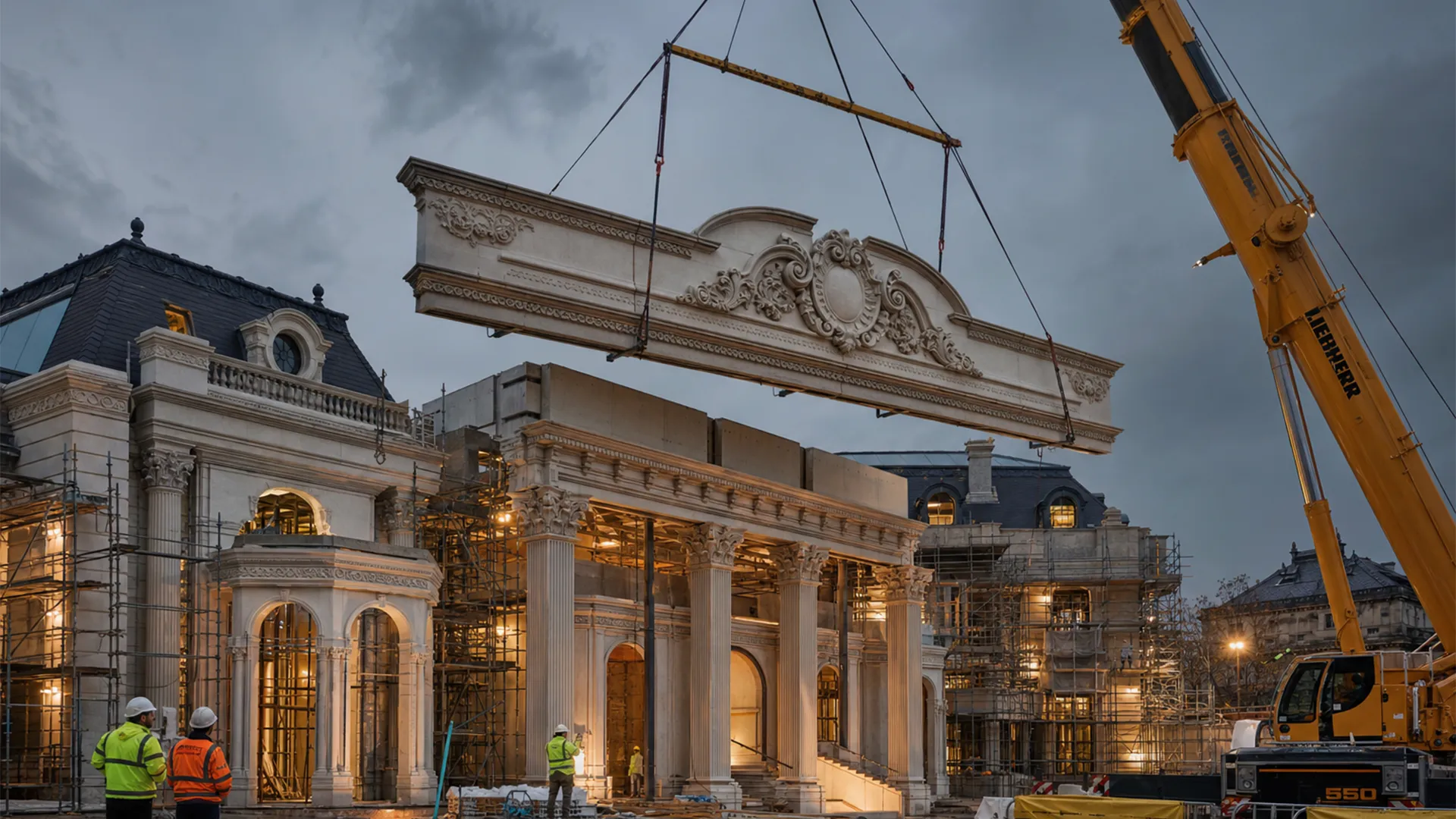
Safe Handling Requires Specialized Equipment
Massive stone elements cannot be handled like ordinary construction materials.
Depending on size and weight, crews may require:
- forklifts
- cranes
- vacuum lifters
- spreader bars
- custom rigging hardware
Limestone pieces must be transported and lifted with extreme care to prevent chipping, cracking, or catastrophic breakage.
The stone’s weight also affects logistics. Site access, staging space, delivery sequence, and installation order all need to be planned in advance.
For developers, this is one reason natural stone installation carries a premium: the process is labor-intensive and highly technical.
Anchoring Systems Must Be Engineered, Not Assumed
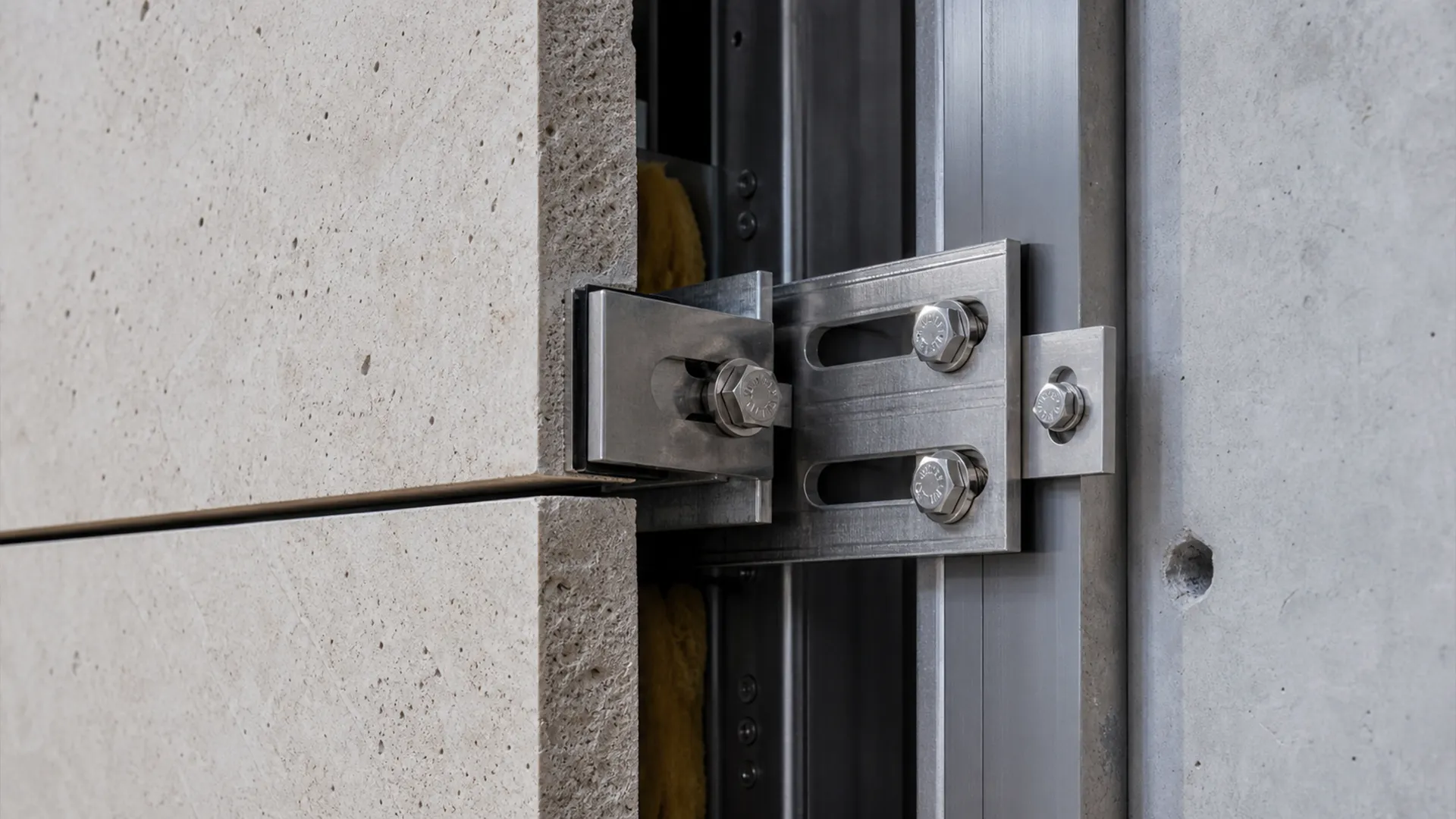
A beautiful limestone element is only as good as its connection to the building.
Modern heavy stone installations typically rely on engineered anchoring systems such as:
- stainless steel dowels
- kerf clips
- concealed brackets
- shelf angles
- support frames
These systems must resist gravity loads, wind forces, thermal movement, and long-term material behavior.
The goal is not merely to hold the stone in place. The goal is to create a secure, durable connection that preserves the visual purity of the design.
This is especially important in exterior applications, where exposure to temperature swings and moisture can create movement over time.
Weather, Moisture, and Thermal Movement Matter
In North America, limestone installations must perform in climates that can be severe and variable.
That means the installation system must account for:
- freeze-thaw cycles
- moisture intrusion
- thermal expansion and contraction
- wind-driven rain
- seasonal movement of the structure
If these factors are ignored, even the finest stone can perform poorly.
Properly designed limestone facade systems include drainage, ventilation, and movement accommodation so the stone can age gracefully while protecting the building behind it.
Installation Tolerance Is Extremely Tight
One of the most difficult aspects of installing heavy limestone is maintaining alignment across large surfaces and complex assemblies.
Stone elements must line up with:
- adjacent pieces
- window openings
- structural joints
- surrounding materials
- architectural centerlines
Even a small deviation can disrupt symmetry and visual rhythm, especially in classical or formal design languages.
Because limestone is frequently used in high-visibility areas—entries, facades, mantels, portals, and feature walls—installation quality becomes directly tied to the perceived value of the entire project.
The Craftsmanship Is Invisible but Essential
When limestone is installed correctly, the result feels effortless.
But that effortless appearance hides a great deal of invisible work:
- structural analysis
- fabrication coordination
- site logistics
- precision setting
- leveling and shimming
- sealant and joint detailing
This is what separates a truly luxury execution from a merely expensive one.
The final effect is not just a stone feature. It is an integrated architectural statement that appears inevitable because every technical decision was solved in advance.
Why This Complexity Adds Value
For rational buyers and developers, installation complexity can seem like a cost burden. In reality, it is one of the reasons heavy limestone carries prestige.
A properly engineered stone installation delivers:
- superior durability
- architectural authenticity
- long-term visual stability
- a sense of permanence
- higher perceived property value
The building does not just look more substantial. It is more substantial.
That physical truth matters in luxury architecture, where buyers often respond instinctively to materials that communicate permanence and structural seriousness.
Conclusion: Technical Difficulty Creates Architectural Excellence
The engineering of heavy limestone installation is not a barrier to beauty—it is the mechanism that makes beauty possible.
Massive stone elements demand structural coordination, precision fabrication, specialized lifting, and expert installation. Those challenges explain why the finished result feels so commanding and refined.
For homeowners and developers, this technical rigor justifies the investment. A limestone feature is not simply decorative; it is an engineered architectural asset designed to endure.
At Marvelous Marble, we approach every heavy limestone element with both craftsmanship and engineering discipline, ensuring that each installation is as secure and technically sound as it is visually powerful.
The engineering of elegance begins where design ambition meets structural reality. Heavy limestone architectural elements can transform a building into something truly monumental, but their installation demands far more than aesthetic vision. For homeowners and developers in the U.S. and Canada, the decision to use large stone components must be justified not only by beauty, but by technical precision, safety, and long-term performance.
Massive limestone pieces—such as door surrounds, cornices, fireplace mantels, columns, and full facade elements—carry substantial weight. Installing them correctly requires engineering expertise, rigorous planning, specialized anchoring, and experienced craft execution.
For rational buyers evaluating the cost of natural stone, this is where value becomes clear: the complexity of installation is part of what makes the result so enduring, refined, and architecturally serious.
Why Heavy Limestone Elements Are Different
Unlike lightweight cladding systems or decorative finishes, heavy limestone components function as true architectural elements.
They are not visual simulations. They are solid, physical pieces of stone that must be integrated into the building envelope or interior structure with accuracy.
Their challenges include:
- significant dead load
- precise dimensional tolerances
- structural anchoring requirements
- transportation and handling risks
- coordination with building envelope systems
The stone itself is only one part of the equation. The success of the installation depends on how well the entire system is designed to support it.
Structural Load Is the First Challenge
Every heavy limestone element introduces additional load to the building structure. That load must be calculated early in the design process.
Engineers and fabricators must account for:
- the weight of individual stone pieces
- concentrated point loads at connection locations
- load transfer into structural framing or masonry backup
- long-term movement and settlement
A large limestone mantel, for example, may appear purely decorative, but it still exerts a real force on the supporting structure. The same is true for full-height surrounds, overmantels, portal entries, and monumental facade panels.
If these loads are not properly resolved, the result can be cracking, deflection, or premature failure.
Precision Fabrication Comes Before Installation
Before a single piece is set on site, the stone must be fabricated with exacting precision.
This includes:
- detailed shop drawings
- structural coordination
- templating of field conditions
- edge profiling
- anchor hole placement
- verification of tolerances
Heavy limestone elements are often custom-made to fit a specific project, which means fabrication must align closely with the actual field conditions.
Small dimensional deviations can create major installation problems once the stone arrives on site. Because limestone is dense and unforgiving, there is little room for improvisation.
Safe Handling Requires Specialized Equipment
Massive stone elements cannot be handled like ordinary construction materials.
Depending on size and weight, crews may require:
- forklifts
- cranes
- vacuum lifters
- spreader bars
- custom rigging hardware
Limestone pieces must be transported and lifted with extreme care to prevent chipping, cracking, or catastrophic breakage.
The stone’s weight also affects logistics. Site access, staging space, delivery sequence, and installation order all need to be planned in advance.
For developers, this is one reason natural stone installation carries a premium: the process is labor-intensive and highly technical.
Anchoring Systems Must Be Engineered, Not Assumed
A beautiful limestone element is only as good as its connection to the building.
Modern heavy stone installations typically rely on engineered anchoring systems such as:
- stainless steel dowels
- kerf clips
- concealed brackets
- shelf angles
- support frames
These systems must resist gravity loads, wind forces, thermal movement, and long-term material behavior.
The goal is not merely to hold the stone in place. The goal is to create a secure, durable connection that preserves the visual purity of the design.
This is especially important in exterior applications, where exposure to temperature swings and moisture can create movement over time.
Weather, Moisture, and Thermal Movement Matter
In North America, limestone installations must perform in climates that can be severe and variable.
That means the installation system must account for:
- freeze-thaw cycles
- moisture intrusion
- thermal expansion and contraction
- wind-driven rain
- seasonal movement of the structure
If these factors are ignored, even the finest stone can perform poorly.
Properly designed limestone facade systems include drainage, ventilation, and movement accommodation so the stone can age gracefully while protecting the building behind it.
Installation Tolerance Is Extremely Tight
One of the most difficult aspects of installing heavy limestone is maintaining alignment across large surfaces and complex assemblies.
Stone elements must line up with:
- adjacent pieces
- window openings
- structural joints
- surrounding materials
- architectural centerlines
Even a small deviation can disrupt symmetry and visual rhythm, especially in classical or formal design languages.
Because limestone is frequently used in high-visibility areas—entries, facades, mantels, portals, and feature walls—installation quality becomes directly tied to the perceived value of the entire project.
The Craftsmanship Is Invisible but Essential
When limestone is installed correctly, the result feels effortless.
But that effortless appearance hides a great deal of invisible work:
- structural analysis
- fabrication coordination
- site logistics
- precision setting
- leveling and shimming
- sealant and joint detailing
This is what separates a truly luxury execution from a merely expensive one.
The final effect is not just a stone feature. It is an integrated architectural statement that appears inevitable because every technical decision was solved in advance.
Why This Complexity Adds Value
For rational buyers and developers, installation complexity can seem like a cost burden. In reality, it is one of the reasons heavy limestone carries prestige.
A properly engineered stone installation delivers:
- superior durability
- architectural authenticity
- long-term visual stability
- a sense of permanence
- higher perceived property value
The building does not just look more substantial. It is more substantial.
That physical truth matters in luxury architecture, where buyers often respond instinctively to materials that communicate permanence and structural seriousness.
Conclusion: Technical Difficulty Creates Architectural Excellence
The engineering of heavy limestone installation is not a barrier to beauty—it is the mechanism that makes beauty possible.
Massive stone elements demand structural coordination, precision fabrication, specialized lifting, and expert installation. Those challenges explain why the finished result feels so commanding and refined.
For homeowners and developers, this technical rigor justifies the investment. A limestone feature is not simply decorative; it is an engineered architectural asset designed to endure.
At Marvelous Marble, we approach every heavy limestone element with both craftsmanship and engineering discipline, ensuring that each installation is as secure and technically sound as it is visually powerful.

Related Posts
Specifying Limestone Façades for Freeze–Thaw Climates: An Architect’s Guide
A technical planning guide for luxury limestone façades in New York, Chicago…