
Waterjet vs. Hand-Cut Marble Medallions: Process, Precision and Cost Factors
Waterjet vs. Hand-Cut Marble Medallions: Process, Precision and Cost Factors
A custom marble medallion is one of the most personal features a luxury home can have. Whether it sits in a foyer, a rotunda or beneath a staircase, it is a piece of stone artwork set into the floor. Behind every medallion is a decision most clients never see: how the pieces are cut. Today there are two main approaches – waterjet cutting and traditional hand cutting – and each shapes the final result, the timeline and the price.
This guide explains how both methods work, where each excels, and what drives the cost of a medallion so you can discuss your project with confidence.
What Is a Marble Medallion?
A medallion is a decorative inlay assembled from many individually cut pieces of marble and other natural stone. The pieces are fitted together, much like a mosaic or a jigsaw, and then installed as a single design in the floor. Medallions range from simple geometric patterns to intricate compositions with scrollwork, compass roses, floral motifs or family crests.
Waterjet Cutting: How It Works
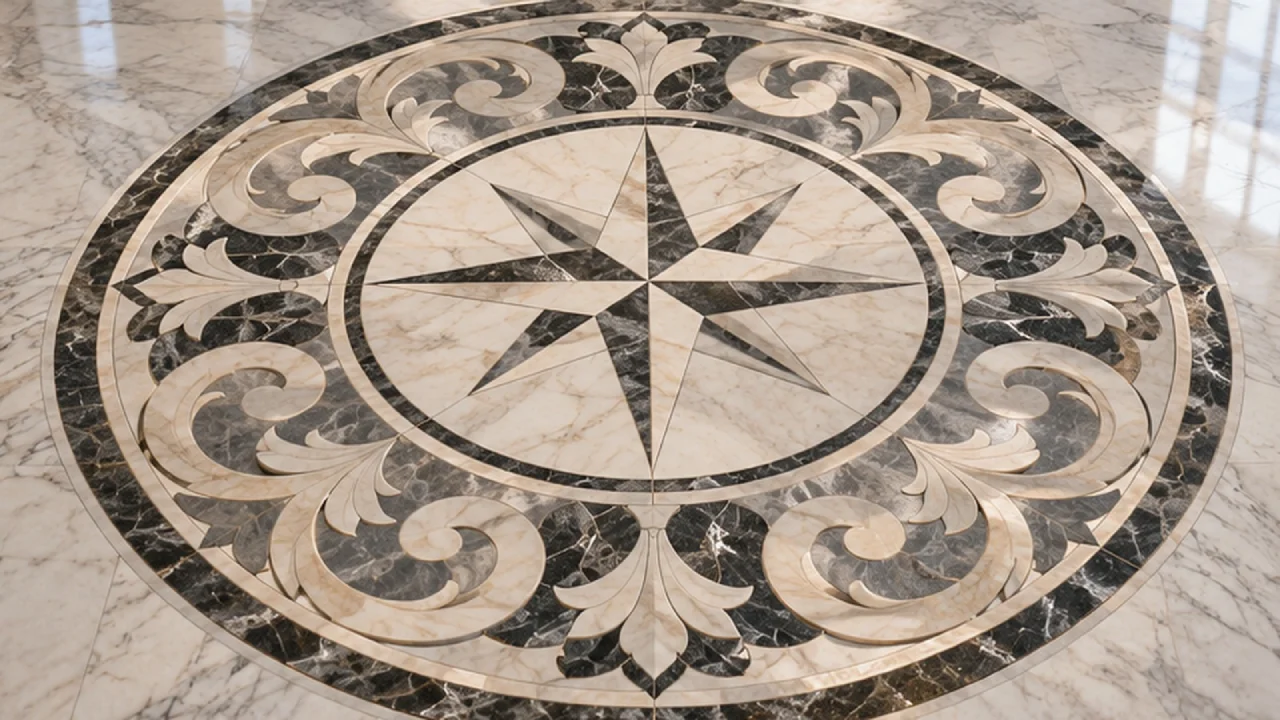
A waterjet cuts stone using an extremely high-pressure stream of water mixed with fine abrasive. The machine follows a digital drawing, so the same design can be cut with great accuracy.
Strengths
- Precision: Joints between pieces can be very tight, which gives crisp lines and a clean look.
- Complex shapes: Fine curves, tight inside corners and delicate details are practical to cut.
- Repeatability: The same pattern can be reproduced, which matters for matching sets or replacing a damaged piece.
- Efficiency: Cutting is faster once the digital drawing is final, which can shorten production.
Limitations
- It depends on a precise digital drawing, so design time is front-loaded.
- Some very fine features still need hand finishing to look natural.
- Fragile thin points of stone may need design adjustments so pieces do not break.
Hand Cutting: How It Works
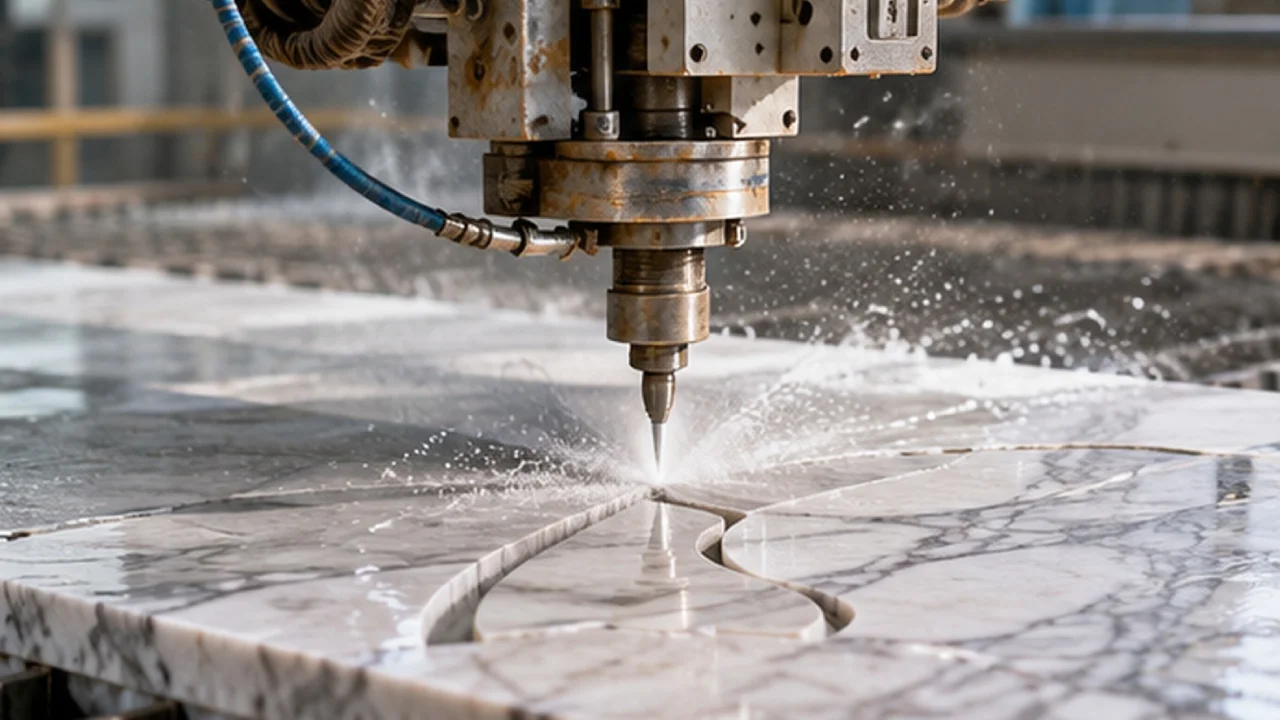
In the traditional method, artisans cut and shape stone pieces by hand and with saws and grinders, fitting each piece against its neighbors by eye and feel. This is the craft that produced historic floors in palaces, churches and grand houses.
Strengths
- Character: Subtle variation can give the work a handmade, artisanal quality.
- Judgment in the stone: A skilled cutter can place veining and color movement within each piece for a more painterly result.
- Flexibility: Adjustments can be made as the piece takes shape.
Limitations
- It is slower and more labor-intensive.
- Very tight, uniform joints on highly complex shapes are harder to achieve.
- Quality depends heavily on the skill of the craftsperson.
Side-by-Side Comparison
| Waterjet | Hand-Cut | |
|---|---|---|
| Precision of joints | Very high | Depends on artisan skill |
| Fine detail | Excellent | Possible but labor-intensive |
| Look | Crisp, clean, exact | Organic, artisanal |
| Production speed | Faster once design is final | Slower |
| Repeatability | High | Lower |
| Best for | Intricate, geometric or crest designs | Classical designs where handcrafted feel matters |
In practice, many high-end medallions combine both: waterjet for accurate cutting and skilled hand finishing, selection and fitting for the final result.
What Drives the Cost of a Medallion?
Cutting method is only one factor. When requesting a quote, expect pricing to reflect:
- Size. Larger medallions use more material and take longer to assemble.
- Design complexity. More pieces, tighter curves and finer details mean more cutting and fitting time.
- Stone selection. Rare or highly figured marbles, and the number of different stones used, affect material cost and wastage.
- Finish. Polished, honed or mixed finishes require different processing.
- Artwork and drawings. Original custom designs need design and approval time before cutting begins.
- Pre-assembly and packing. Medallions are often fitted together in the shop, numbered, and packed so they can be installed correctly on site.
- Shipping and installation. Distance, handling and the installer’s experience all play a role, especially for large international orders.
How to Get an Accurate Quote
To receive a realistic estimate, prepare the following:
- Room dimensions and a floor plan showing the medallion location
- The finished diameter or overall size you have in mind
- Reference images or a rough sketch of the design
- Preferred stones and colors, or the stones already used elsewhere in the home
- Whether you need a border, field tile or other elements designed to match
- Your project timeline
Choosing the Right Approach for Your Home
- Choose waterjet if your design is intricate, geometric or includes a logo or crest, and you want crisp joints.
- Choose hand-cut work if you want a distinctly handcrafted, classical character.
- Ask for a hybrid approach if you want both precision and artisanal finishing – this is what many luxury projects use.
Final Thoughts
The best medallion is not defined by one technology but by the quality of design, stone selection and craftsmanship behind it. Understanding the difference between waterjet and hand cutting helps you ask better questions and make a smarter investment in a feature that will last the life of the house.
Ready to design a medallion for your home? Contact Marvelous Marble to discuss custom marble medallions and receive a tailored quote.
A custom marble medallion is one of the most personal features a luxury home can have. Whether it sits in a foyer, a rotunda or beneath a staircase, it is a piece of stone artwork set into the floor. Behind every medallion is a decision most clients never see: how the pieces are cut. Today there are two main approaches – waterjet cutting and traditional hand cutting – and each shapes the final result, the timeline and the price.
This guide explains how both methods work, where each excels, and what drives the cost of a medallion so you can discuss your project with confidence.
What Is a Marble Medallion?
A medallion is a decorative inlay assembled from many individually cut pieces of marble and other natural stone. The pieces are fitted together, much like a mosaic or a jigsaw, and then installed as a single design in the floor. Medallions range from simple geometric patterns to intricate compositions with scrollwork, compass roses, floral motifs or family crests.
Waterjet Cutting: How It Works
A waterjet cuts stone using an extremely high-pressure stream of water mixed with fine abrasive. The machine follows a digital drawing, so the same design can be cut with great accuracy.
Strengths
- Precision: Joints between pieces can be very tight, which gives crisp lines and a clean look.
- Complex shapes: Fine curves, tight inside corners and delicate details are practical to cut.
- Repeatability: The same pattern can be reproduced, which matters for matching sets or replacing a damaged piece.
- Efficiency: Cutting is faster once the digital drawing is final, which can shorten production.
Limitations
- It depends on a precise digital drawing, so design time is front-loaded.
- Some very fine features still need hand finishing to look natural.
- Fragile thin points of stone may need design adjustments so pieces do not break.
Hand Cutting: How It Works
In the traditional method, artisans cut and shape stone pieces by hand and with saws and grinders, fitting each piece against its neighbors by eye and feel. This is the craft that produced historic floors in palaces, churches and grand houses.
Strengths
- Character: Subtle variation can give the work a handmade, artisanal quality.
- Judgment in the stone: A skilled cutter can place veining and color movement within each piece for a more painterly result.
- Flexibility: Adjustments can be made as the piece takes shape.
Limitations
- It is slower and more labor-intensive.
- Very tight, uniform joints on highly complex shapes are harder to achieve.
- Quality depends heavily on the skill of the craftsperson.
Side-by-Side Comparison
| Waterjet | Hand-Cut | |
|---|---|---|
| Precision of joints | Very high | Depends on artisan skill |
| Fine detail | Excellent | Possible but labor-intensive |
| Look | Crisp, clean, exact | Organic, artisanal |
| Production speed | Faster once design is final | Slower |
| Repeatability | High | Lower |
| Best for | Intricate, geometric or crest designs | Classical designs where handcrafted feel matters |
In practice, many high-end medallions combine both: waterjet for accurate cutting and skilled hand finishing, selection and fitting for the final result.
What Drives the Cost of a Medallion?
Cutting method is only one factor. When requesting a quote, expect pricing to reflect:
- Size. Larger medallions use more material and take longer to assemble.
- Design complexity. More pieces, tighter curves and finer details mean more cutting and fitting time.
- Stone selection. Rare or highly figured marbles, and the number of different stones used, affect material cost and wastage.
- Finish. Polished, honed or mixed finishes require different processing.
- Artwork and drawings. Original custom designs need design and approval time before cutting begins.
- Pre-assembly and packing. Medallions are often fitted together in the shop, numbered, and packed so they can be installed correctly on site.
- Shipping and installation. Distance, handling and the installer’s experience all play a role, especially for large international orders.
How to Get an Accurate Quote
To receive a realistic estimate, prepare the following:
- Room dimensions and a floor plan showing the medallion location
- The finished diameter or overall size you have in mind
- Reference images or a rough sketch of the design
- Preferred stones and colors, or the stones already used elsewhere in the home
- Whether you need a border, field tile or other elements designed to match
- Your project timeline
Choosing the Right Approach for Your Home
- Choose waterjet if your design is intricate, geometric or includes a logo or crest, and you want crisp joints.
- Choose hand-cut work if you want a distinctly handcrafted, classical character.
- Ask for a hybrid approach if you want both precision and artisanal finishing – this is what many luxury projects use.
Final Thoughts
The best medallion is not defined by one technology but by the quality of design, stone selection and craftsmanship behind it. Understanding the difference between waterjet and hand cutting helps you ask better questions and make a smarter investment in a feature that will last the life of the house.
Ready to design a medallion for your home? Contact Marvelous Marble to discuss custom marble medallions and receive a tailored quote.

Related Posts
How to Care for a Marble Floor: Sealing, Etching and Polishing Explained
Learn how to seal, clean and polish a marble floor, and the difference between…


