A fireplace mantel is the focal point of a room. It frames the hearth, anchors the furniture arrangement and tells guests what kind of home they are in. For luxury interiors, stone mantels in marble or limestone carry a sense of permanence that no other material quite matches. But with so many historic styles available, how do you choose?
This guide compares three of the most popular families of stone mantels – French, English and Neoclassical – and explains how to match size, style and stone to your room.
French Mantels: Curves, Carving and Romance
French mantels, often inspired by the Louis XIV, XV and XVI periods, are known for their graceful lines and refined ornament.
- Louis XV style: Flowing curves, shell motifs and an asymmetrical softness. Warm and decorative.
- Louis XVI style: Straighter lines, fluting, garlands and ribbons. More restrained and symmetrical.
- Typical look: Shaped shelf, curved apron, carved corners; often paired with a decorative mirror above.
Best for: Formal salons, primary bedrooms and dining rooms in homes with a European or traditional character. They suit rooms where you want elegance with a touch of romance.
English Mantels: Proportion and Quiet Authority
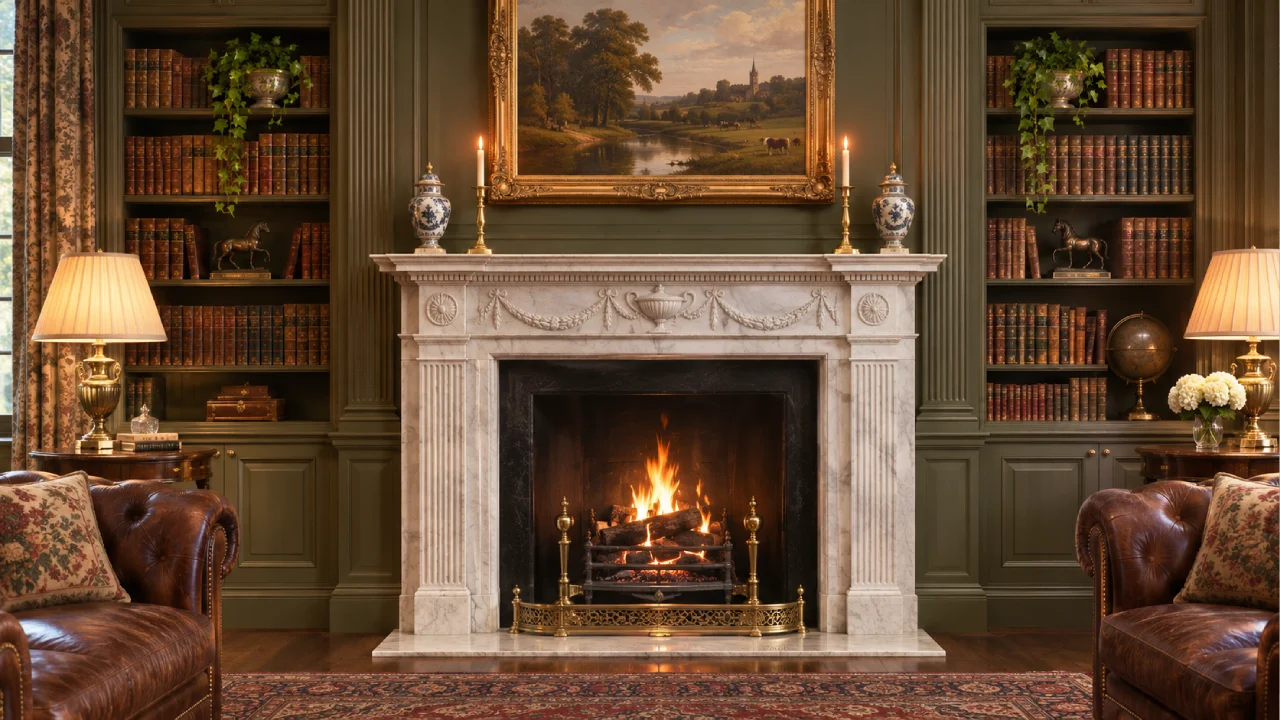
English mantels, especially Georgian and Regency styles, favor order and balance over elaborate decoration.
- Georgian: Clean architectural proportions, simple moldings, sometimes a central tablet or classical motif.
- Regency: Slim, elegant lines, reeded or fluted details and subtle carving.
- Typical look: Rectilinear frame, pronounced shelf, moderate carving.
Best for: Libraries, living rooms and studies, and homes that favor a traditional, understated character. They also work well in transitional interiors because the restrained detail blends easily with modern furniture.
Neoclassical Mantels: Columns, Friezes and Grandeur
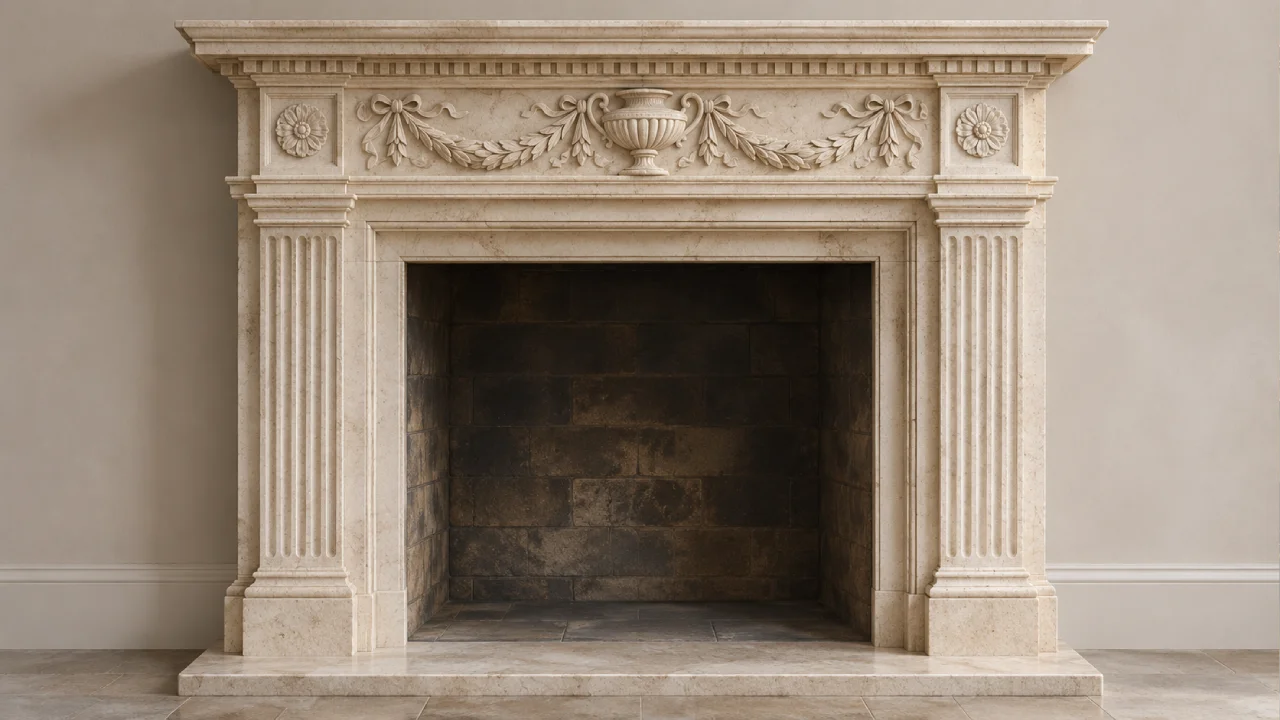
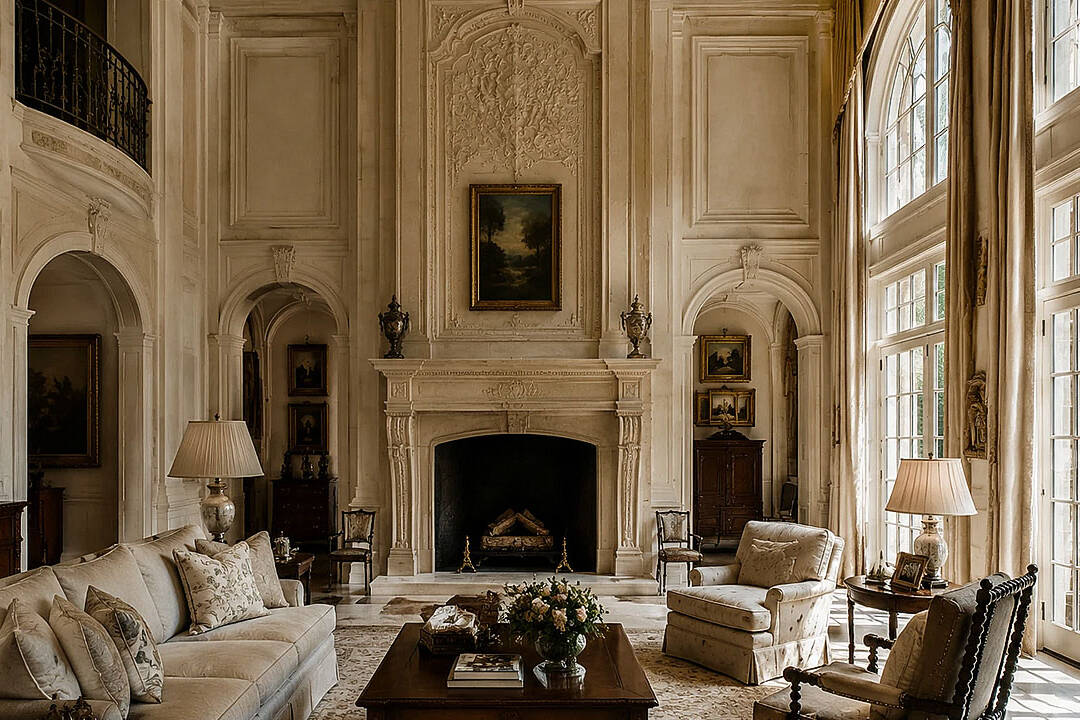
Neoclassical mantels borrow from Greek and Roman architecture. They often feature columns or pilasters, friezes and strong geometric structure.
- Typical look: Pilasters or columns at the sides, a decorated frieze across the top, and a bold shelf.
- Details: Urns, swags, acanthus leaves, Greek key patterns.
- Mood: Formal, dramatic and architectural.
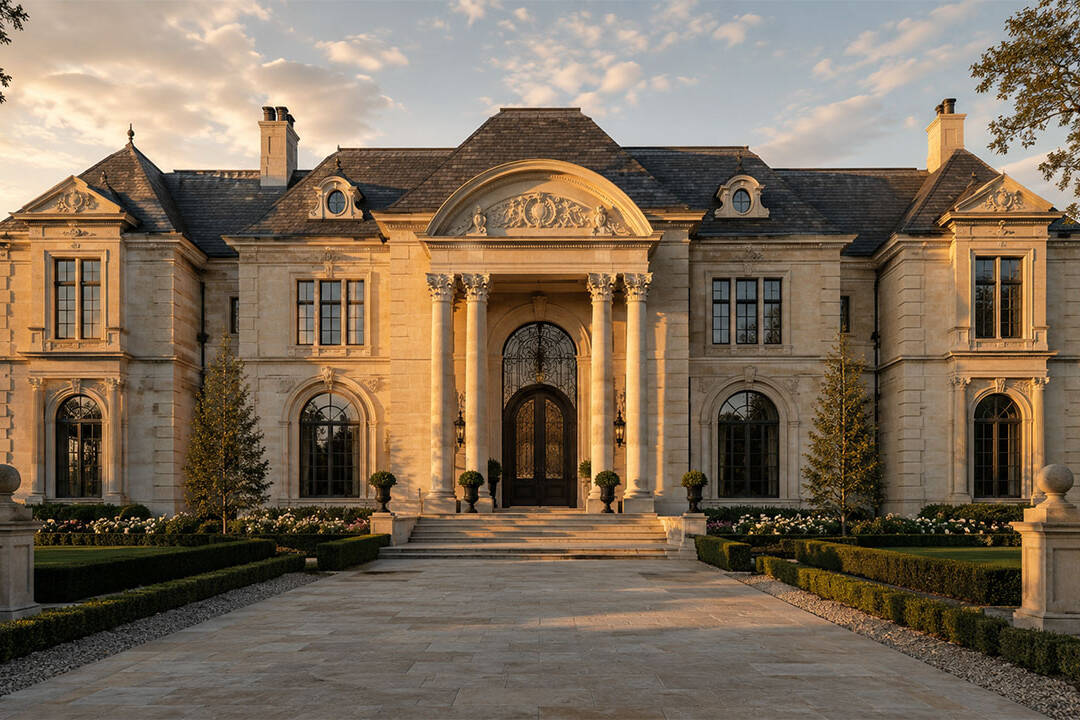
Best for: Grand living rooms, great halls and estates with double-height spaces, especially when columns, a curved staircase or a limestone façade already express a classical language.
Quick Comparison
| French | English | Neoclassical | |
|---|---|---|---|
| Character | Romantic, ornate | Balanced, understated | Grand, architectural |
| Lines | Curved, flowing | Straight, proportioned | Columns and friezes |
| Level of carving | High | Low to medium | Medium to high |
| Works well in | Salons, bedrooms | Libraries, living rooms | Great halls, estates |
| Pairs with | Gilded mirrors, antiques | Paneling, bookshelves | Columns, coffered ceilings |
Getting the Size Right
Even a beautiful mantel looks wrong if the proportions are off. Consider:
- Room scale. A small mantel in a large room feels lost; an oversized one overwhelms a small room.
- Ceiling height. Tall ceilings can carry a taller mantel or an overmantel with a mirror or artwork.
- Firebox opening. The mantel must be built around the actual opening and meet clearance and safety requirements. Check local building and fire codes and the requirements for your fireplace type with your contractor.
- Wall width. Leave visual breathing room on each side so the mantel reads as a deliberate feature.
- What goes above. Plan the mirror, artwork or television position before finalizing the design.
Choosing the Stone
- White and light marble brings brightness and highlights carved detail.
- Veined or colored marble adds drama and works well as a contrast to pale walls.
- Limestone offers a softer, warmer, more matte character and suits both classical and contemporary rooms.
Ask to see samples in your own room lighting, because natural and artificial light change the look of stone considerably.
New Carved or Antique?
Antique mantels carry real history, but they come with limited sizing, variable condition and the work of adapting them to a modern fireplace. A custom-carved mantel can be designed to your exact opening and room while following a historic style. Many designers also blend the two, using an antique-inspired design built to modern standards.
Design Tips
- Echo details from elsewhere in the home, such as door surrounds, columns or ceiling moldings.
- Keep styling edited. A stone mantel with strong carving rarely needs many accessories.
- Match the hearth stone to the mantel or choose a deliberate contrast.
- Think about the evening look: lighting from sconces or picture lights can bring carved details to life.
Final Thoughts
The right mantel is a question of character as much as taste. French styles bring romance, English styles bring calm authority, and Neoclassical styles bring architectural drama. Start from the room – its scale, its light and its style – and the right choice usually becomes clear.
Considering a custom stone mantel? Contact Marvelous Marble to explore designs and receive a quote.
A fireplace mantel is the focal point of a room. It frames the hearth, anchors the furniture arrangement and tells guests what kind of home they are in. For luxury interiors, stone mantels in marble or limestone carry a sense of permanence that no other material quite matches. But with so many historic styles available, how do you choose?
This guide compares three of the most popular families of stone mantels – French, English and Neoclassical – and explains how to match size, style and stone to your room.
French Mantels: Curves, Carving and Romance
French mantels, often inspired by the Louis XIV, XV and XVI periods, are known for their graceful lines and refined ornament.
- Louis XV style: Flowing curves, shell motifs and an asymmetrical softness. Warm and decorative.
- Louis XVI style: Straighter lines, fluting, garlands and ribbons. More restrained and symmetrical.
- Typical look: Shaped shelf, curved apron, carved corners; often paired with a decorative mirror above.
Best for: Formal salons, primary bedrooms and dining rooms in homes with a European or traditional character. They suit rooms where you want elegance with a touch of romance.
English Mantels: Proportion and Quiet Authority
English mantels, especially Georgian and Regency styles, favor order and balance over elaborate decoration.
- Georgian: Clean architectural proportions, simple moldings, sometimes a central tablet or classical motif.
- Regency: Slim, elegant lines, reeded or fluted details and subtle carving.
- Typical look: Rectilinear frame, pronounced shelf, moderate carving.
Best for: Libraries, living rooms and studies, and homes that favor a traditional, understated character. They also work well in transitional interiors because the restrained detail blends easily with modern furniture.
Neoclassical Mantels: Columns, Friezes and Grandeur
Neoclassical mantels borrow from Greek and Roman architecture. They often feature columns or pilasters, friezes and strong geometric structure.
- Typical look: Pilasters or columns at the sides, a decorated frieze across the top, and a bold shelf.
- Details: Urns, swags, acanthus leaves, Greek key patterns.
- Mood: Formal, dramatic and architectural.
Best for: Grand living rooms, great halls and estates with double-height spaces, especially when columns, a curved staircase or a limestone façade already express a classical language.
Quick Comparison
| French | English | Neoclassical | |
|---|---|---|---|
| Character | Romantic, ornate | Balanced, understated | Grand, architectural |
| Lines | Curved, flowing | Straight, proportioned | Columns and friezes |
| Level of carving | High | Low to medium | Medium to high |
| Works well in | Salons, bedrooms | Libraries, living rooms | Great halls, estates |
| Pairs with | Gilded mirrors, antiques | Paneling, bookshelves | Columns, coffered ceilings |
Getting the Size Right
Even a beautiful mantel looks wrong if the proportions are off. Consider:
- Room scale. A small mantel in a large room feels lost; an oversized one overwhelms a small room.
- Ceiling height. Tall ceilings can carry a taller mantel or an overmantel with a mirror or artwork.
- Firebox opening. The mantel must be built around the actual opening and meet clearance and safety requirements. Check local building and fire codes and the requirements for your fireplace type with your contractor.
- Wall width. Leave visual breathing room on each side so the mantel reads as a deliberate feature.
- What goes above. Plan the mirror, artwork or television position before finalizing the design.
Choosing the Stone
- White and light marble brings brightness and highlights carved detail.
- Veined or colored marble adds drama and works well as a contrast to pale walls.
- Limestone offers a softer, warmer, more matte character and suits both classical and contemporary rooms.
Ask to see samples in your own room lighting, because natural and artificial light change the look of stone considerably.
New Carved or Antique?
Antique mantels carry real history, but they come with limited sizing, variable condition and the work of adapting them to a modern fireplace. A custom-carved mantel can be designed to your exact opening and room while following a historic style. Many designers also blend the two, using an antique-inspired design built to modern standards.
Design Tips
- Echo details from elsewhere in the home, such as door surrounds, columns or ceiling moldings.
- Keep styling edited. A stone mantel with strong carving rarely needs many accessories.
- Match the hearth stone to the mantel or choose a deliberate contrast.
- Think about the evening look: lighting from sconces or picture lights can bring carved details to life.
Final Thoughts
The right mantel is a question of character as much as taste. French styles bring romance, English styles bring calm authority, and Neoclassical styles bring architectural drama. Start from the room – its scale, its light and its style – and the right choice usually becomes clear.
Considering a custom stone mantel? Contact Marvelous Marble to explore designs and receive a quote.