
How to Care for a Marble Floor: Sealing, Etching and Polishing Explained
How to Care for a Marble Floor: Sealing, Etching and Polishing Explained
A marble floor is one of the few finishes in a home that can look better after decades of use. But marble is a natural, porous, calcium-based stone, and it responds to what happens on its surface in ways that porcelain or engineered flooring does not. Understanding three things – sealing, etching and polishing – is the difference between a floor that glows for generations and one that looks tired in five years.
This guide explains what each term means, what actually damages marble, and how to care for floors ranging from simple tiles to full medallion and border designs.
Why Marble Needs Different Care
Marble is made largely of calcite, which reacts with acids. It is also naturally porous, so liquids can travel into the stone if they sit long enough. Both facts explain almost every problem homeowners run into: stains from absorbed liquids, and dull marks from acidic substances.
Staining vs. Etching: Not the Same Problem
These two are often confused, and the fix is different for each.
| Stain | Etch | |
|---|---|---|
| What it is | A substance absorbed into the stone | A chemical reaction that dulls the polished surface |
| Typical causes | Coffee, wine, oil, ink, cosmetics | Lemon juice, vinegar, tomato, wine, acidic cleaners |
| How it looks | A darker or colored patch | A pale, dull or cloudy spot, often with a defined outline |
| Main defense | Sealing and quick cleanup | Avoiding acids; prompt wiping |
| Typical fix | Poultice or professional cleaning | Re-polishing by a stone professional |
The key point: a sealer helps protect against stains, but it does not make marble acid-proof. A sealed floor can still etch.
Sealing: What It Does and When to Do It
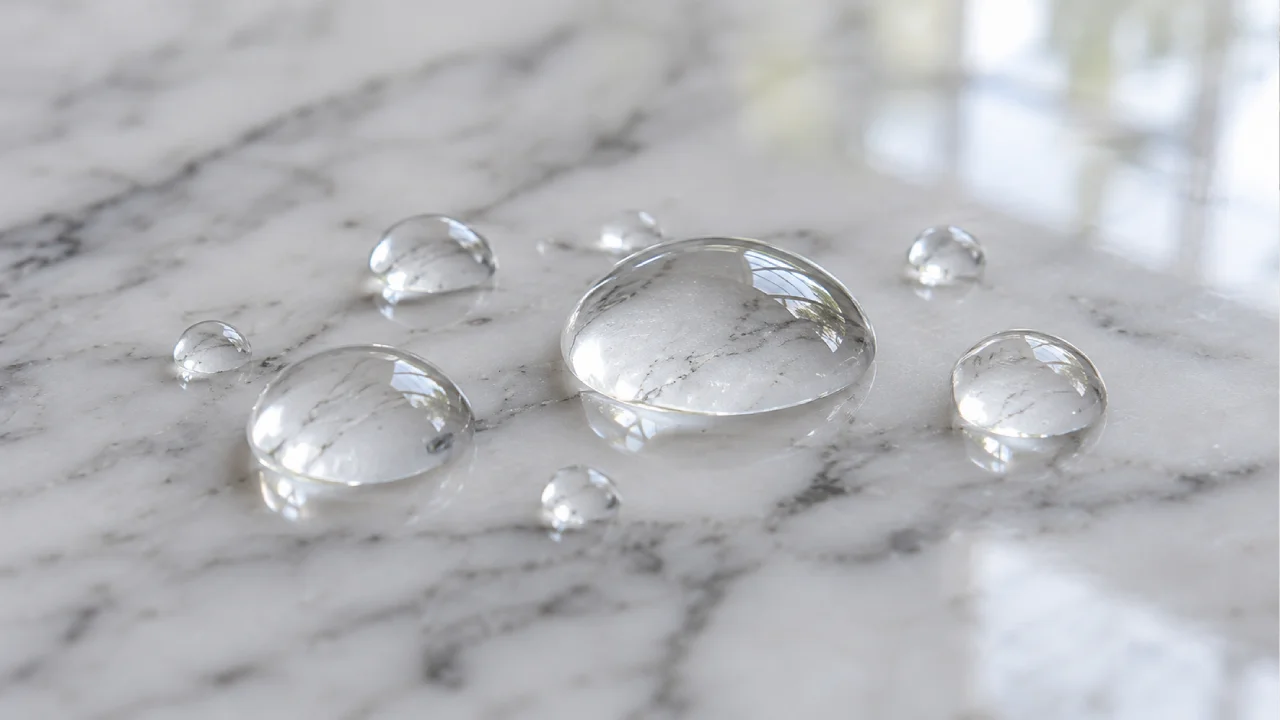
A penetrating sealer fills the pores just below the surface so liquids are slower to soak in. It does not create a coating on top and should not change the look of a properly finished floor.
- Which type: Use a penetrating (impregnating) sealer made for natural stone, and follow the manufacturer’s guidance for your stone and finish.
- When: Seal after installation, then re-seal on a schedule suited to traffic and stone type. Kitchens and entry halls usually need attention sooner than a powder room.
- Simple test: Put a few drops of water on the floor. If the stone darkens and the water soaks in within a few minutes, it is time to re-seal.
- Prepare first: The floor must be clean and fully dry before sealer goes on.
Daily and Weekly Care
- Dust mop or vacuum regularly. Grit acts like sandpaper and slowly dulls the polish. Use a soft-brush attachment.
- Damp-mop with a pH-neutral stone cleaner. Avoid vinegar, lemon, ammonia and general-purpose bathroom or kitchen sprays.
- Wipe spills promptly. Blot rather than rub, so liquid is not pushed into the stone.
- Use mats at entrances. Most abrasive dirt comes in on shoes.
- Add felt pads under furniture, and avoid dragging heavy items.
- Use coasters and trays in bathrooms and bars, where perfume, cosmetics and drinks sit on stone.
Polishing and Restoration
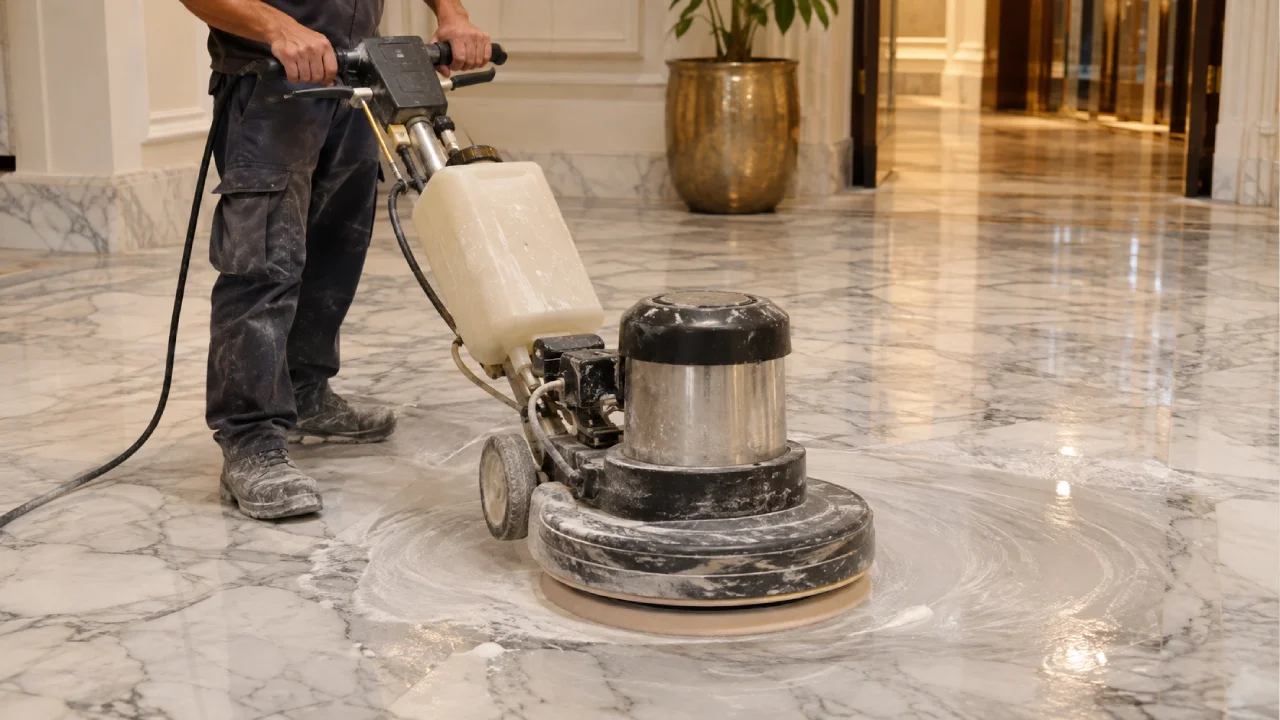
Over time, even well-kept floors lose some shine in high-traffic paths. Professional restoration usually follows these steps:
- Cleaning and inspection to identify stains, etching and scratches.
- Honing, where needed, to remove etching and light scratches with progressively finer abrasives.
- Polishing to bring back the gloss and depth of the stone.
- Sealing to protect the freshly restored surface.
This is work for experienced stone technicians. Using the wrong abrasive, polishing powder or machine can leave swirl marks or uneven sheen, especially on decorative inlay work.
Special Care for Medallions, Borders and Inlays
Custom designs combine different stones in one surface, and each stone can react differently to cleaners, sealers and abrasion.
- Treat the whole design as one surface: always use the same stone-safe products across the field, border and medallion.
- Check that grout lines or fine joints between contrasting stones are sealed and not trapping moisture.
- Place rugs thoughtfully. Covering a medallion hides your investment, and rug backing can trap moisture or discolor light stone.
- Ask the installer for a care sheet specific to the stones used in your design.
Common Mistakes to Avoid
- Cleaning with vinegar or citrus-based “natural” cleaners
- Using steam mops or harsh scouring powders
- Assuming a sealer makes the floor acid-proof
- Letting spills sit overnight
- Hiring a general floor-cleaning service with no stone experience
When to Call a Professional
Call a stone specialist if you see widespread dullness, deep stains that do not lift with gentle cleaning, scratches you can feel with a fingernail, or cracked or loose pieces. Early attention is almost always cheaper and less invasive than waiting.
Final Thoughts
Marble does not demand constant work – it demands the right work. A pH-neutral cleaner, a good sealer, quick spill response and occasional professional polishing are enough to keep a floor beautiful for decades, from a simple hallway to a full custom medallion entry.
Have a marble floor project in mind, or want to protect one you already own? Contact Marvelous Marble for guidance on design, installation and long-term care.
A marble floor is one of the few finishes in a home that can look better after decades of use. But marble is a natural, porous, calcium-based stone, and it responds to what happens on its surface in ways that porcelain or engineered flooring does not. Understanding three things – sealing, etching and polishing – is the difference between a floor that glows for generations and one that looks tired in five years.
This guide explains what each term means, what actually damages marble, and how to care for floors ranging from simple tiles to full medallion and border designs.
Why Marble Needs Different Care
Marble is made largely of calcite, which reacts with acids. It is also naturally porous, so liquids can travel into the stone if they sit long enough. Both facts explain almost every problem homeowners run into: stains from absorbed liquids, and dull marks from acidic substances.
Staining vs. Etching: Not the Same Problem
These two are often confused, and the fix is different for each.
| Stain | Etch | |
|---|---|---|
| What it is | A substance absorbed into the stone | A chemical reaction that dulls the polished surface |
| Typical causes | Coffee, wine, oil, ink, cosmetics | Lemon juice, vinegar, tomato, wine, acidic cleaners |
| How it looks | A darker or colored patch | A pale, dull or cloudy spot, often with a defined outline |
| Main defense | Sealing and quick cleanup | Avoiding acids; prompt wiping |
| Typical fix | Poultice or professional cleaning | Re-polishing by a stone professional |
The key point: a sealer helps protect against stains, but it does not make marble acid-proof. A sealed floor can still etch.
Sealing: What It Does and When to Do It
A penetrating sealer fills the pores just below the surface so liquids are slower to soak in. It does not create a coating on top and should not change the look of a properly finished floor.
- Which type: Use a penetrating (impregnating) sealer made for natural stone, and follow the manufacturer’s guidance for your stone and finish.
- When: Seal after installation, then re-seal on a schedule suited to traffic and stone type. Kitchens and entry halls usually need attention sooner than a powder room.
- Simple test: Put a few drops of water on the floor. If the stone darkens and the water soaks in within a few minutes, it is time to re-seal.
- Prepare first: The floor must be clean and fully dry before sealer goes on.
Daily and Weekly Care
- Dust mop or vacuum regularly. Grit acts like sandpaper and slowly dulls the polish. Use a soft-brush attachment.
- Damp-mop with a pH-neutral stone cleaner. Avoid vinegar, lemon, ammonia and general-purpose bathroom or kitchen sprays.
- Wipe spills promptly. Blot rather than rub, so liquid is not pushed into the stone.
- Use mats at entrances. Most abrasive dirt comes in on shoes.
- Add felt pads under furniture, and avoid dragging heavy items.
- Use coasters and trays in bathrooms and bars, where perfume, cosmetics and drinks sit on stone.
Polishing and Restoration
Over time, even well-kept floors lose some shine in high-traffic paths. Professional restoration usually follows these steps:
- Cleaning and inspection to identify stains, etching and scratches.
- Honing, where needed, to remove etching and light scratches with progressively finer abrasives.
- Polishing to bring back the gloss and depth of the stone.
- Sealing to protect the freshly restored surface.
This is work for experienced stone technicians. Using the wrong abrasive, polishing powder or machine can leave swirl marks or uneven sheen, especially on decorative inlay work.
Special Care for Medallions, Borders and Inlays
Custom designs combine different stones in one surface, and each stone can react differently to cleaners, sealers and abrasion.
- Treat the whole design as one surface: always use the same stone-safe products across the field, border and medallion.
- Check that grout lines or fine joints between contrasting stones are sealed and not trapping moisture.
- Place rugs thoughtfully. Covering a medallion hides your investment, and rug backing can trap moisture or discolor light stone.
- Ask the installer for a care sheet specific to the stones used in your design.
Common Mistakes to Avoid
- Cleaning with vinegar or citrus-based “natural” cleaners
- Using steam mops or harsh scouring powders
- Assuming a sealer makes the floor acid-proof
- Letting spills sit overnight
- Hiring a general floor-cleaning service with no stone experience
When to Call a Professional
Call a stone specialist if you see widespread dullness, deep stains that do not lift with gentle cleaning, scratches you can feel with a fingernail, or cracked or loose pieces. Early attention is almost always cheaper and less invasive than waiting.
Final Thoughts
Marble does not demand constant work – it demands the right work. A pH-neutral cleaner, a good sealer, quick spill response and occasional professional polishing are enough to keep a floor beautiful for decades, from a simple hallway to a full custom medallion entry.
Have a marble floor project in mind, or want to protect one you already own? Contact Marvelous Marble for guidance on design, installation and long-term care.

Related Posts
Waterjet vs. Hand-Cut Marble Medallions: Process, Precision and Cost Factors
Compare waterjet and hand-cut marble medallions: how each is made, where each…


