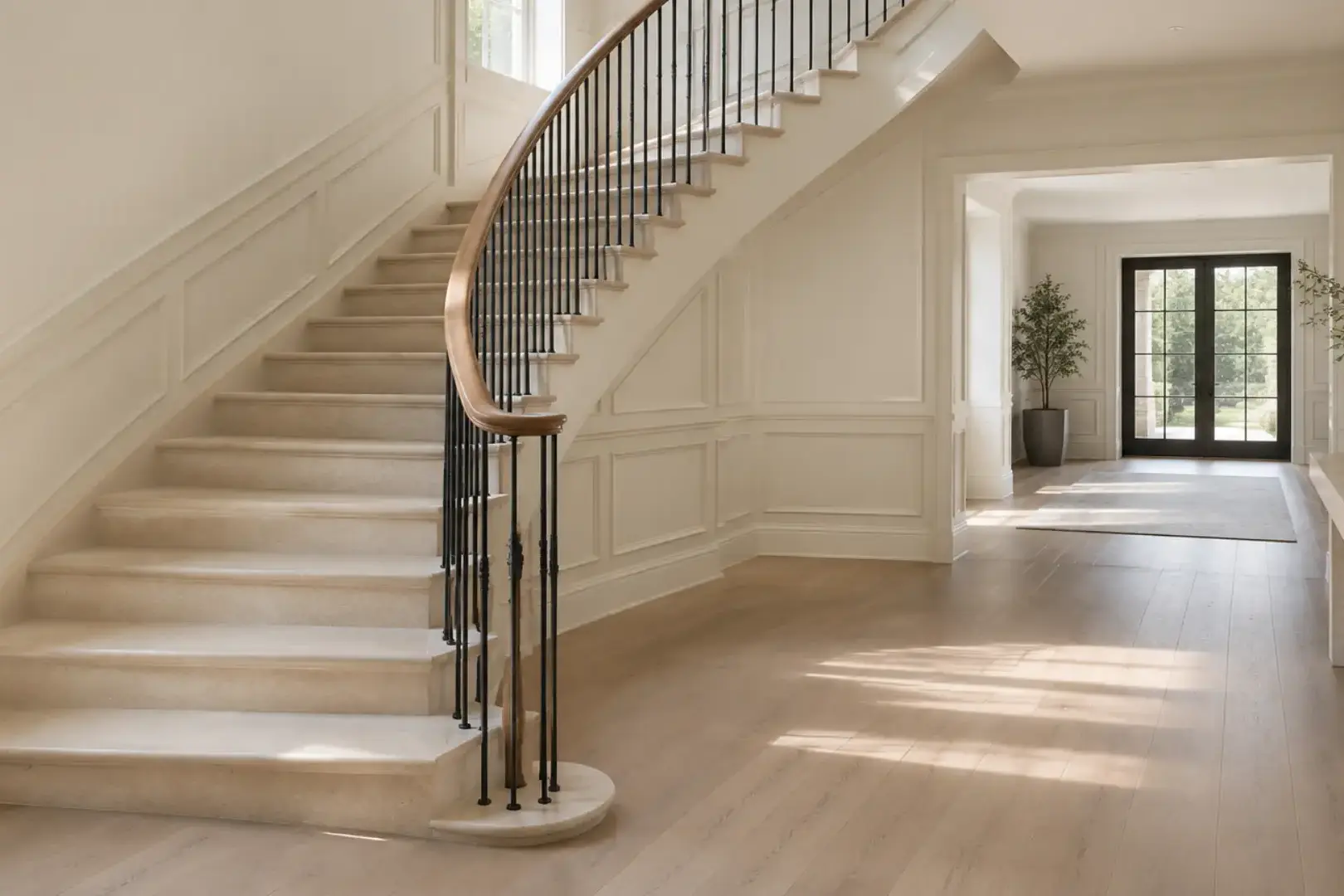
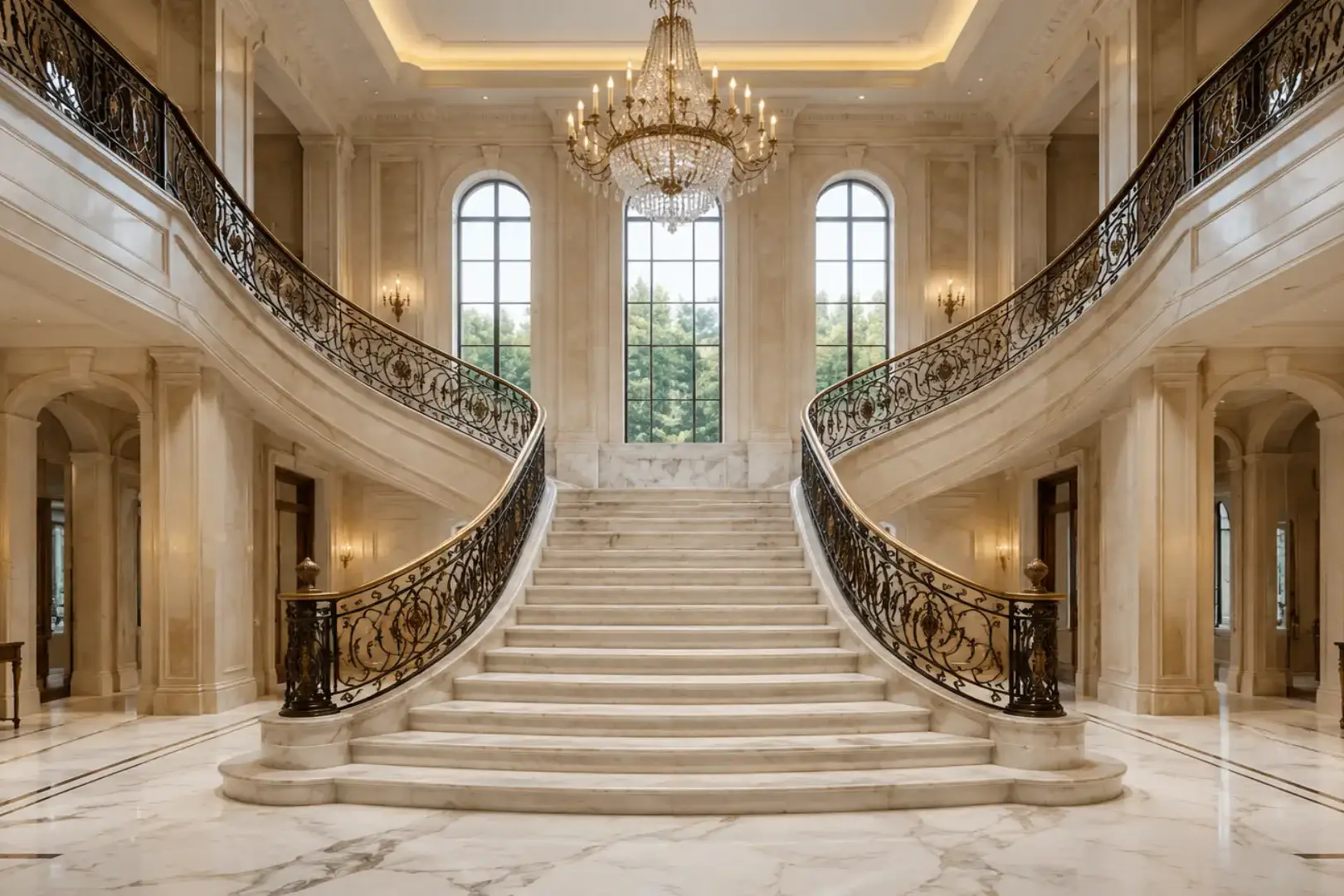
Stone has long been synonymous with architectural weight. Traditionally, marble and limestone were used for monumental staircases—thick balustrades, elaborate moldings, and heavy, polished surfaces. But today, stone does not have to feel “heavy” or traditional. When handled with modern precision, modern minimalist stone stairs can appear remarkably light, airy, and sophisticated.
For high-net-worth homeowners and designers, the challenge is to introduce the permanence of natural stone into a space that feels contemporary and curated. The solution is not to hide the stone, but to refine how we use it.
The Aesthetic of Lightness
Minimalism is not the absence of character; it is the thoughtful control of it. In a minimalist staircase, the material itself becomes the focal point. We move away from decorative scrollwork and bulky risers, shifting focus toward tread proportions, the rhythm of solid and void, and the interaction between stone and light.
When we design modern minimalist stone stairs, we treat the material as a sculptural element. The stone provides texture and geological history, while the engineering provides the “flight.” This creates a powerful visual tension: the inherent mass of the marble contrasted against the illusion of weightlessness.
Visual Weight vs. Structural Reality
The most common misconception is that stone stairs must look thick to be safe. Stone is physically heavy, but the appearance of lightness is achieved through engineering and detailing.
To reduce visual mass, we employ several design strategies:
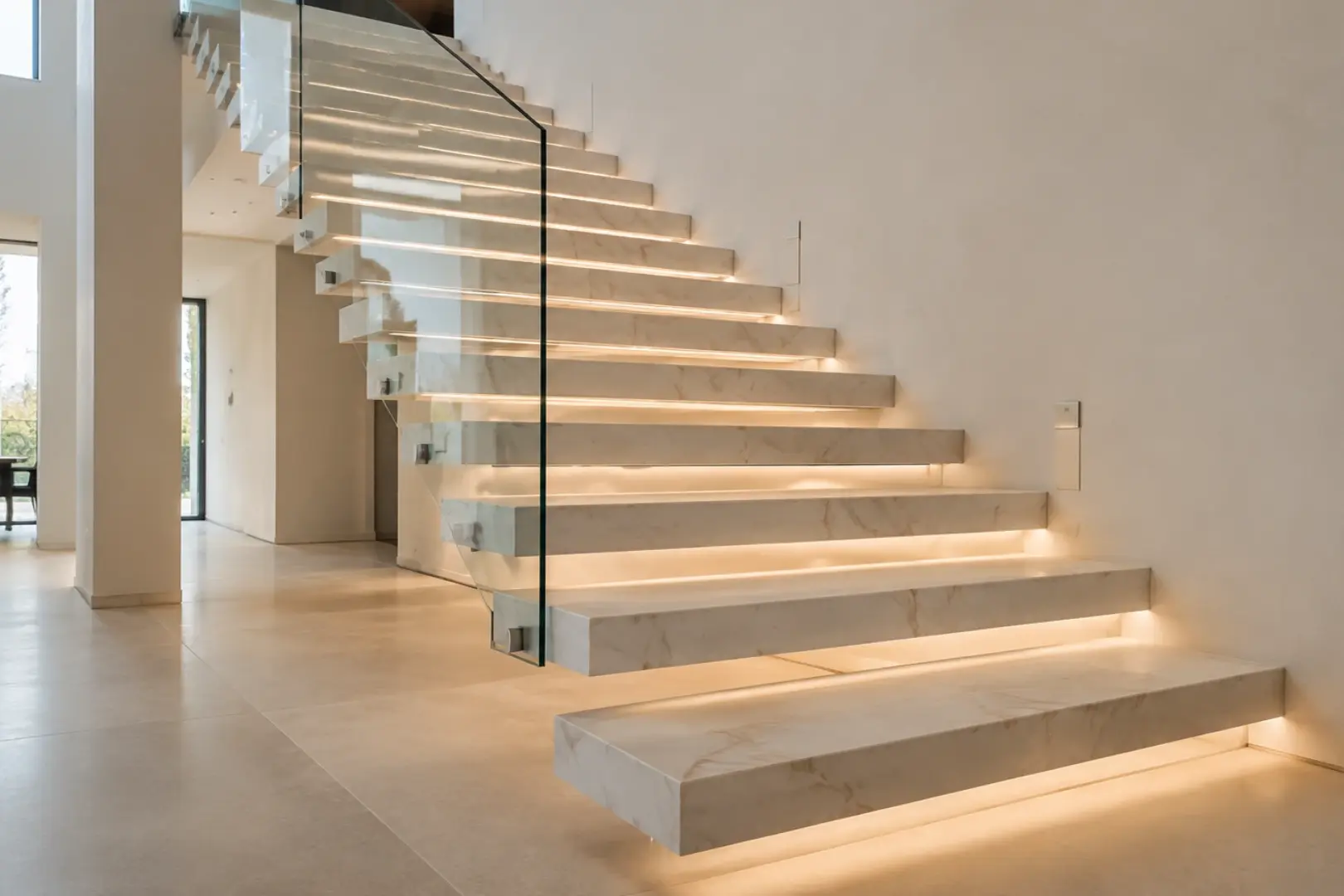
- Concealed Support: By recessing steel stringers or using cantilevered systems anchored into reinforced walls, we eliminate bulky support structures.
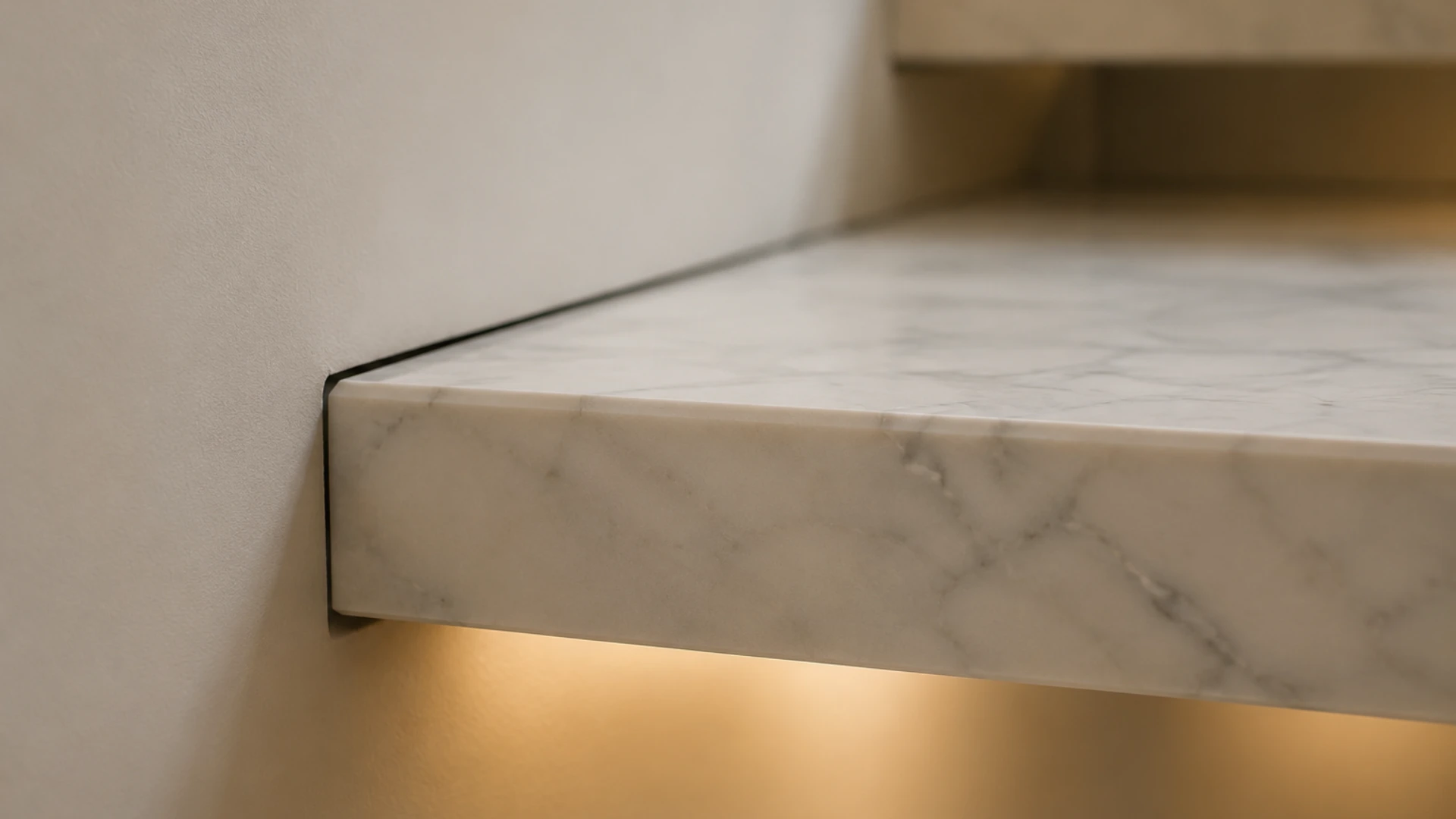
- Shadow Gaps: Recessing the treads slightly from the wall creates a thin line of shadow, making the stairs appear to “float” independently of the structure.
- Refined Edge Profiles: A micro-bevel or a sharp, clean edge profile reduces the perceived thickness of the tread without compromising durability.
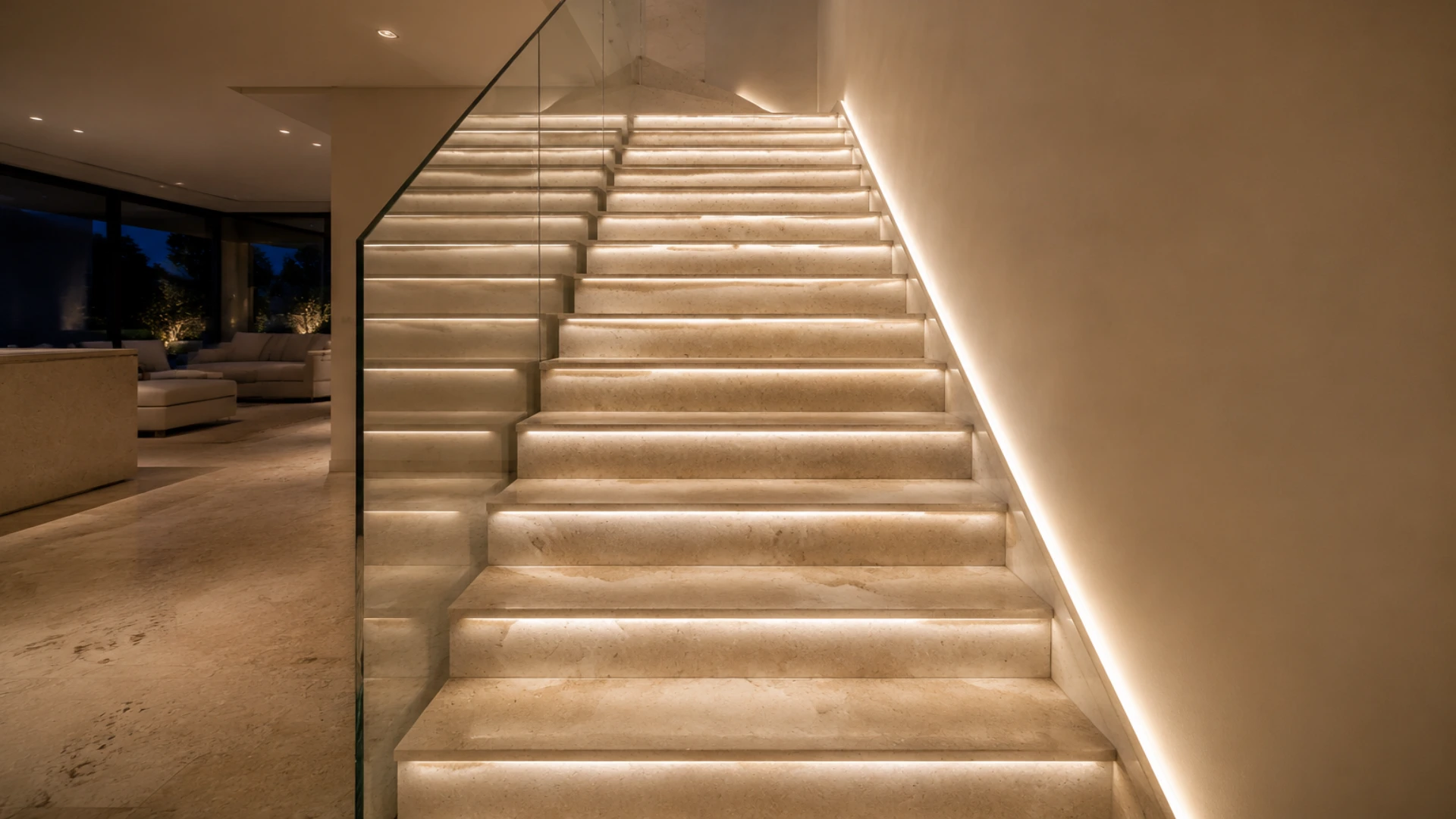
- Integrated Lighting: Concealed linear LEDs beneath treads emphasize the negative space, further reinforcing the “floating” illusion.
Material Selection: Choosing for Minimalism
In a minimalist composition, there is nowhere for imperfections to hide. Every vein and pore is visible, so the selection of the stone is critical.
- Light & Uniform Stones: Marbles like Calacatta or Statuario offer a sense of brightness. For a quieter look, high-density limestones provide a uniform, architectural texture that complements modern interiors beautifully.
- Directional Veining: The way the stone is cut matters. Vein-cut patterns can reinforce the horizontal line of the stairs, acting as a rhythmic element that guides the eye upward.
- Finish Matters: Avoid over-polishing. A honed or satin finish is preferred for modern stairs. It reduces glare, emphasizes the stone’s natural geometry, and creates a tactile, architectural feel that feels right at home in a contemporary space.
The Engineering of Precision
A minimalist staircase is only as good as its installation. Because these designs often lack ornate trim to cover small discrepancies, the tolerance for error is near zero.
- 3D Laser Templating: We capture the exact site conditions to ensure each tread fits perfectly.
- Hidden Reinforcement: The steel substructure must be integrated into the wall or slab assembly early in the construction process. This is not a “finish carpentry” job; it is a structural project.
- Dry-Lay Verification: We often perform a dry-lay in our facility to verify vein continuity and joint alignment before the stone ever reaches the job site.
Integrating Safety and Design
Minimalist design must never come at the expense of safety. In the best designs, safety is “invisible.”
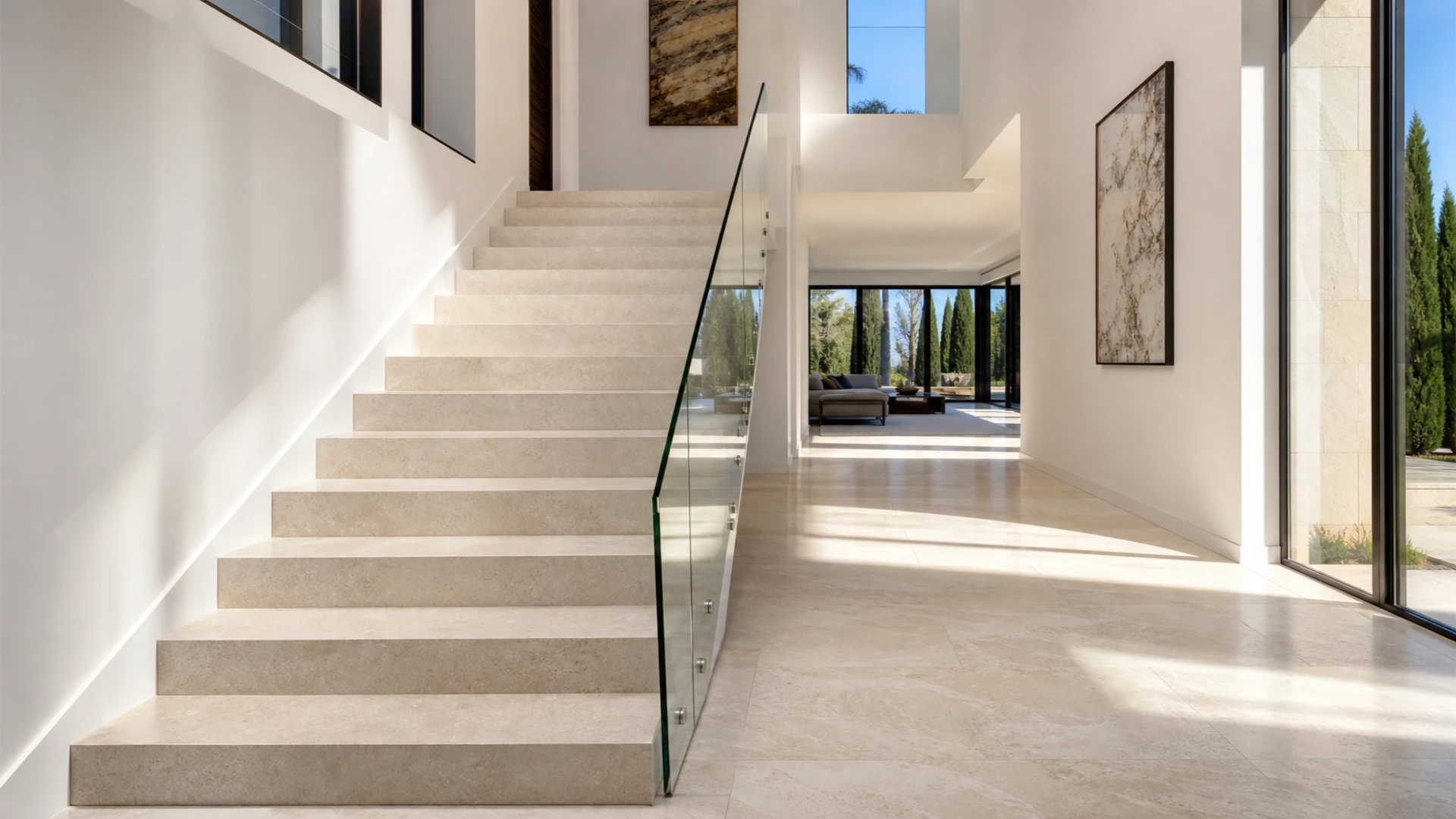
Frameless glass balustrades are a favorite for modern minimalist stone stairs because they offer fall protection without obstructing the visual flow. For a more tactile approach, slim metal handrails in blackened steel or bronze provide a sharp, graphic contrast to the softness of the stone. The key is to integrate these elements into the staircase design, rather than bolting them on as an afterthought.
Making Stone Part of the Architecture
The strongest designs are those where the staircase is part of the original architectural volume, not an insertion. When we coordinate early in the conceptual phase, we can align the stairs with floor openings, lighting plans, and adjacent flooring transitions.
Whether you are looking to integrate a custom staircase with your stone fireplace mantels or want to create a central sculptural feature, the material discipline should remain consistent. We aim for continuity, not uniformity. The staircase should feel like a natural extension of the home’s layout.
Conclusion
Modern minimalist stone stairs are a testament to the idea that you can have both permanence and lightness. By stripping away the unnecessary and focusing on the marriage of structural mastery and geological beauty, these stairs capture the essence of “Quiet Luxury.”
If you are currently in the planning stages of a luxury residence, do not treat your staircase as a standard utility. Treat it as an architectural investment. With the right engineering, the heaviest materials can be made to feel as light as air.
Ready to refine your architectural vision?
Connect with the stone specialists at Marvelous Marble to discuss the engineering and aesthetic possibilities for your project. Request your design consultation here.
Stone has long been synonymous with architectural weight. Traditionally, marble and limestone were used for monumental staircases—thick balustrades, elaborate moldings, and heavy, polished surfaces. But today, stone does not have to feel “heavy” or traditional. When handled with modern precision, modern minimalist stone stairs can appear remarkably light, airy, and sophisticated.
For high-net-worth homeowners and designers, the challenge is to introduce the permanence of natural stone into a space that feels contemporary and curated. The solution is not to hide the stone, but to refine how we use it.
The Aesthetic of Lightness
Minimalism is not the absence of character; it is the thoughtful control of it. In a minimalist staircase, the material itself becomes the focal point. We move away from decorative scrollwork and bulky risers, shifting focus toward tread proportions, the rhythm of solid and void, and the interaction between stone and light.
When we design modern minimalist stone stairs, we treat the material as a sculptural element. The stone provides texture and geological history, while the engineering provides the “flight.” This creates a powerful visual tension: the inherent mass of the marble contrasted against the illusion of weightlessness.
Visual Weight vs. Structural Reality
The most common misconception is that stone stairs must look thick to be safe. Stone is physically heavy, but the appearance of lightness is achieved through engineering and detailing.
To reduce visual mass, we employ several design strategies:
- Concealed Support: By recessing steel stringers or using cantilevered systems anchored into reinforced walls, we eliminate bulky support structures.
- Shadow Gaps: Recessing the treads slightly from the wall creates a thin line of shadow, making the stairs appear to “float” independently of the structure.
- Refined Edge Profiles: A micro-bevel or a sharp, clean edge profile reduces the perceived thickness of the tread without compromising durability.
- Integrated Lighting: Concealed linear LEDs beneath treads emphasize the negative space, further reinforcing the “floating” illusion.
Material Selection: Choosing for Minimalism
In a minimalist composition, there is nowhere for imperfections to hide. Every vein and pore is visible, so the selection of the stone is critical.
- Light & Uniform Stones: Marbles like Calacatta or Statuario offer a sense of brightness. For a quieter look, high-density limestones provide a uniform, architectural texture that complements modern interiors beautifully.
- Directional Veining: The way the stone is cut matters. Vein-cut patterns can reinforce the horizontal line of the stairs, acting as a rhythmic element that guides the eye upward.
- Finish Matters: Avoid over-polishing. A honed or satin finish is preferred for modern stairs. It reduces glare, emphasizes the stone’s natural geometry, and creates a tactile, architectural feel that feels right at home in a contemporary space.
The Engineering of Precision
A minimalist staircase is only as good as its installation. Because these designs often lack ornate trim to cover small discrepancies, the tolerance for error is near zero.
- 3D Laser Templating: We capture the exact site conditions to ensure each tread fits perfectly.
- Hidden Reinforcement: The steel substructure must be integrated into the wall or slab assembly early in the construction process. This is not a “finish carpentry” job; it is a structural project.
- Dry-Lay Verification: We often perform a dry-lay in our facility to verify vein continuity and joint alignment before the stone ever reaches the job site.
Integrating Safety and Design
Minimalist design must never come at the expense of safety. In the best designs, safety is “invisible.”
Frameless glass balustrades are a favorite for modern minimalist stone stairs because they offer fall protection without obstructing the visual flow. For a more tactile approach, slim metal handrails in blackened steel or bronze provide a sharp, graphic contrast to the softness of the stone. The key is to integrate these elements into the staircase design, rather than bolting them on as an afterthought.
Making Stone Part of the Architecture
The strongest designs are those where the staircase is part of the original architectural volume, not an insertion. When we coordinate early in the conceptual phase, we can align the stairs with floor openings, lighting plans, and adjacent flooring transitions.
Whether you are looking to integrate a custom staircase with your stone fireplace mantels or want to create a central sculptural feature, the material discipline should remain consistent. We aim for continuity, not uniformity. The staircase should feel like a natural extension of the home’s layout.
Conclusion
Modern minimalist stone stairs are a testament to the idea that you can have both permanence and lightness. By stripping away the unnecessary and focusing on the marriage of structural mastery and geological beauty, these stairs capture the essence of “Quiet Luxury.”
If you are currently in the planning stages of a luxury residence, do not treat your staircase as a standard utility. Treat it as an architectural investment. With the right engineering, the heaviest materials can be made to feel as light as air.
Ready to refine your architectural vision?
Connect with the stone specialists at Marvelous Marble to discuss the engineering and aesthetic possibilities for your project. Request your design consultation here.