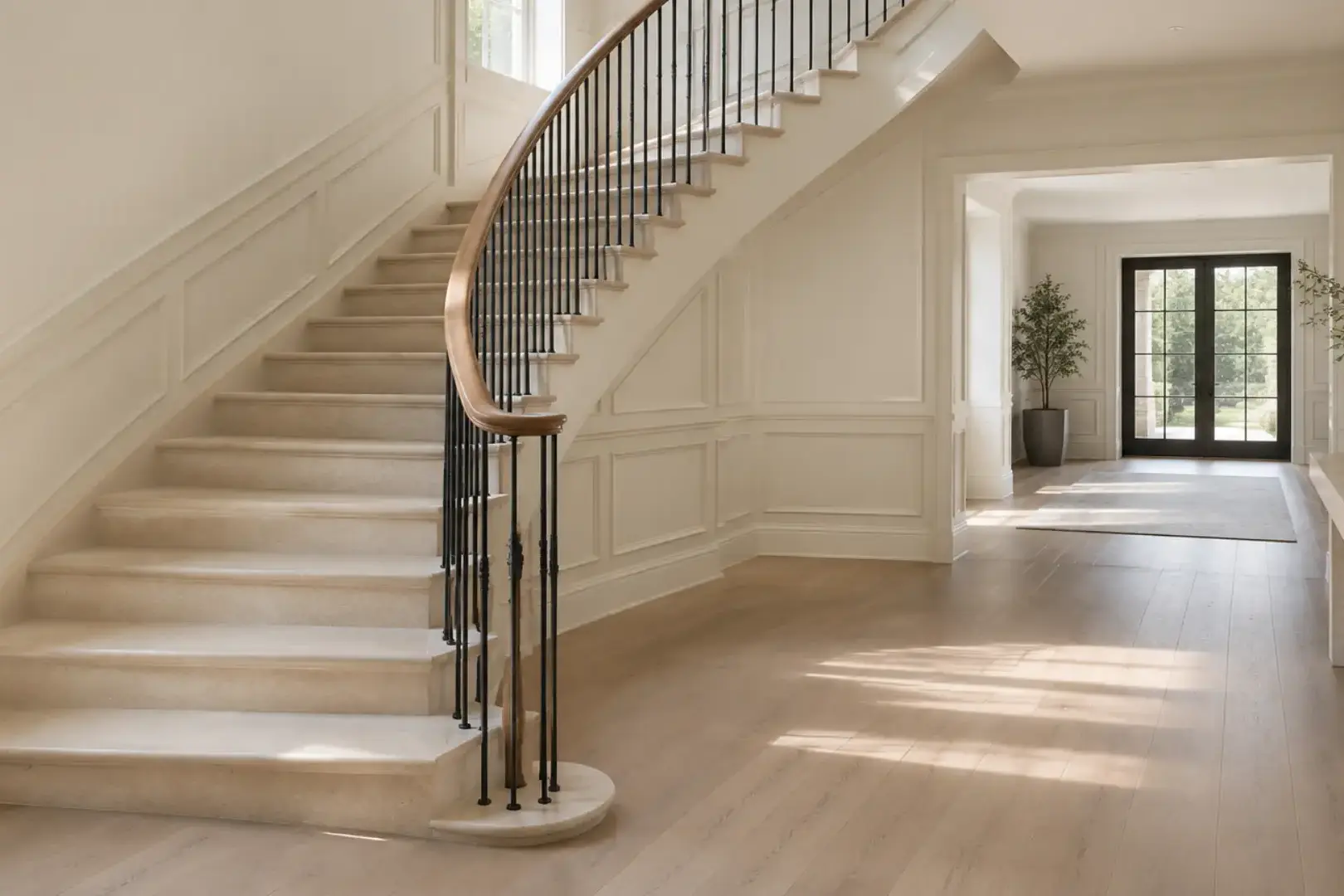
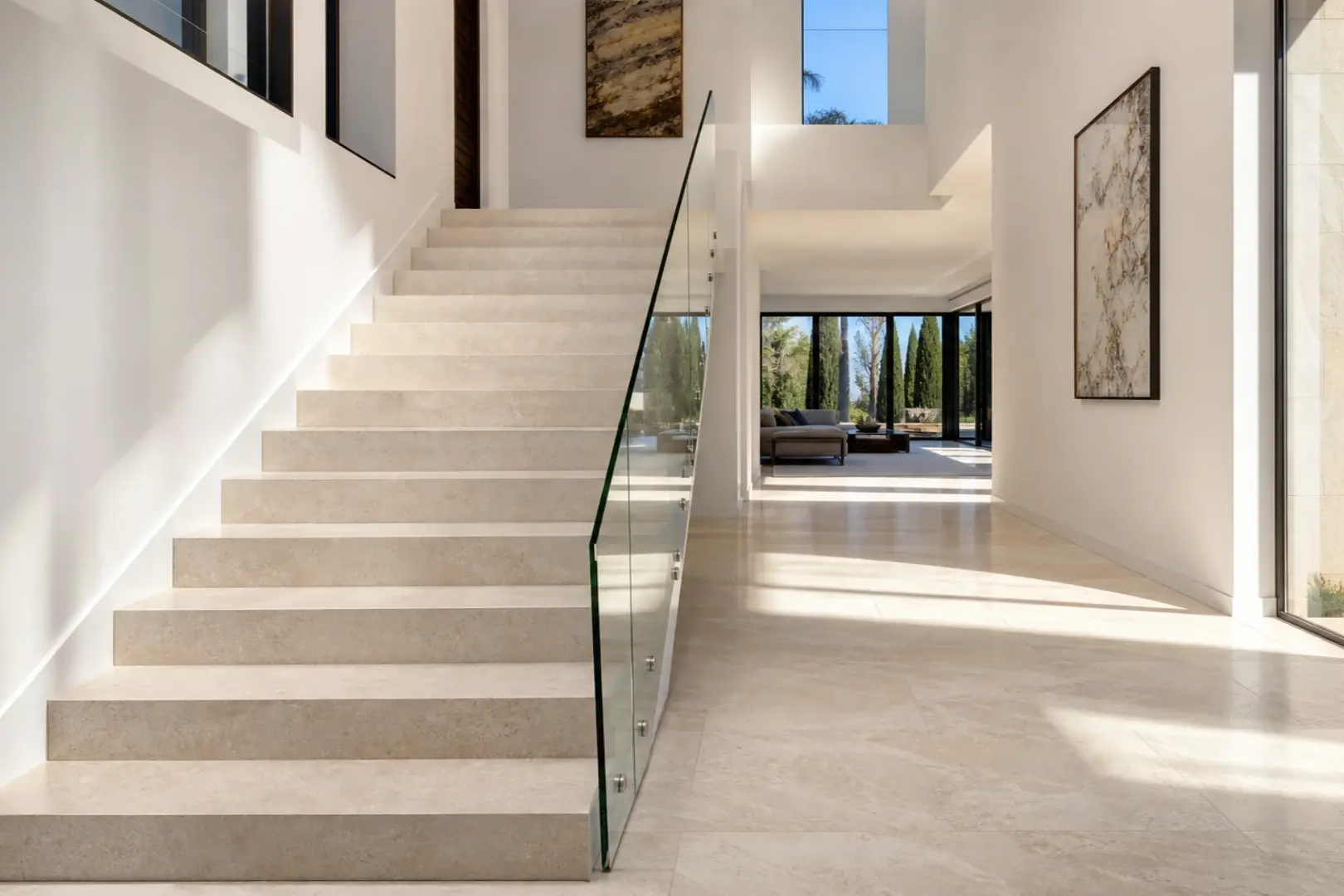
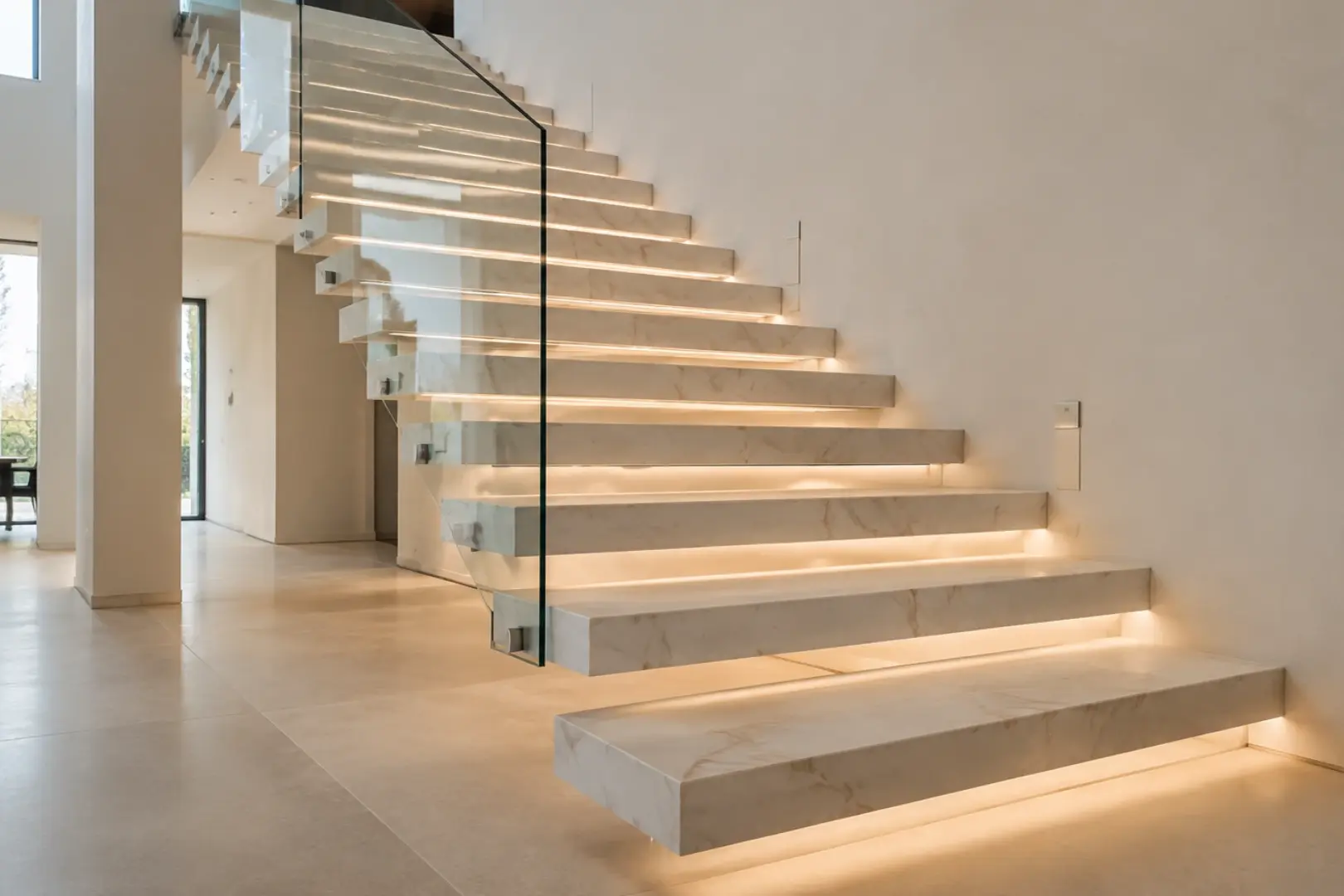
In luxury residential design, few architectural elements create a stronger first impression than a grand staircase. Long associated with European palaces, historic manors, and formal estates, this staircase style continues to appeal to homeowners who want their entrance sequence to feel timeless, refined, and memorable. Today, the grand European staircase style is being reinterpreted for private residences that value both classical beauty and custom craftsmanship.
For high-net-worth homeowners and interior designers in the conceptual phase, this style offers more than visual drama. It establishes a sense of arrival. It turns the foyer into an architectural experience rather than a simple circulation space. And when executed in natural stone, it carries the permanence and prestige that define true luxury.
Why This Style Endures
The appeal of the grand European staircase style lies in its ability to communicate status, grace, and architectural order. Unlike trend-driven stair designs that may feel temporary, a classical staircase is rooted in proportion, symmetry, and material richness. These principles have remained desirable for centuries because they create spaces that feel balanced and dignified.
In a well-designed home, the staircase often becomes the visual anchor of the foyer. It frames the volume of the room, directs movement, and immediately sets the tone for the rest of the interior. A sweeping stair in marble or limestone signals that the home values craftsmanship, scale, and enduring design language.
This is especially important in large residences where the entrance must do more than connect levels. It must create presence.
The Hallmarks of a Grand European Staircase
A palace-inspired staircase is not defined by size alone. Its impact comes from the relationship between form, proportion, and detail.
Key features often include:
- A sweeping or bifurcated layout
- Broad, generous treads
- Balanced symmetry
- Sculptural balustrades
- Prominent landings
- Carved stone details or classical moldings
- Rich material continuity between stair, floor, and foyer
- A staircase positioned as the centerpiece of the entry
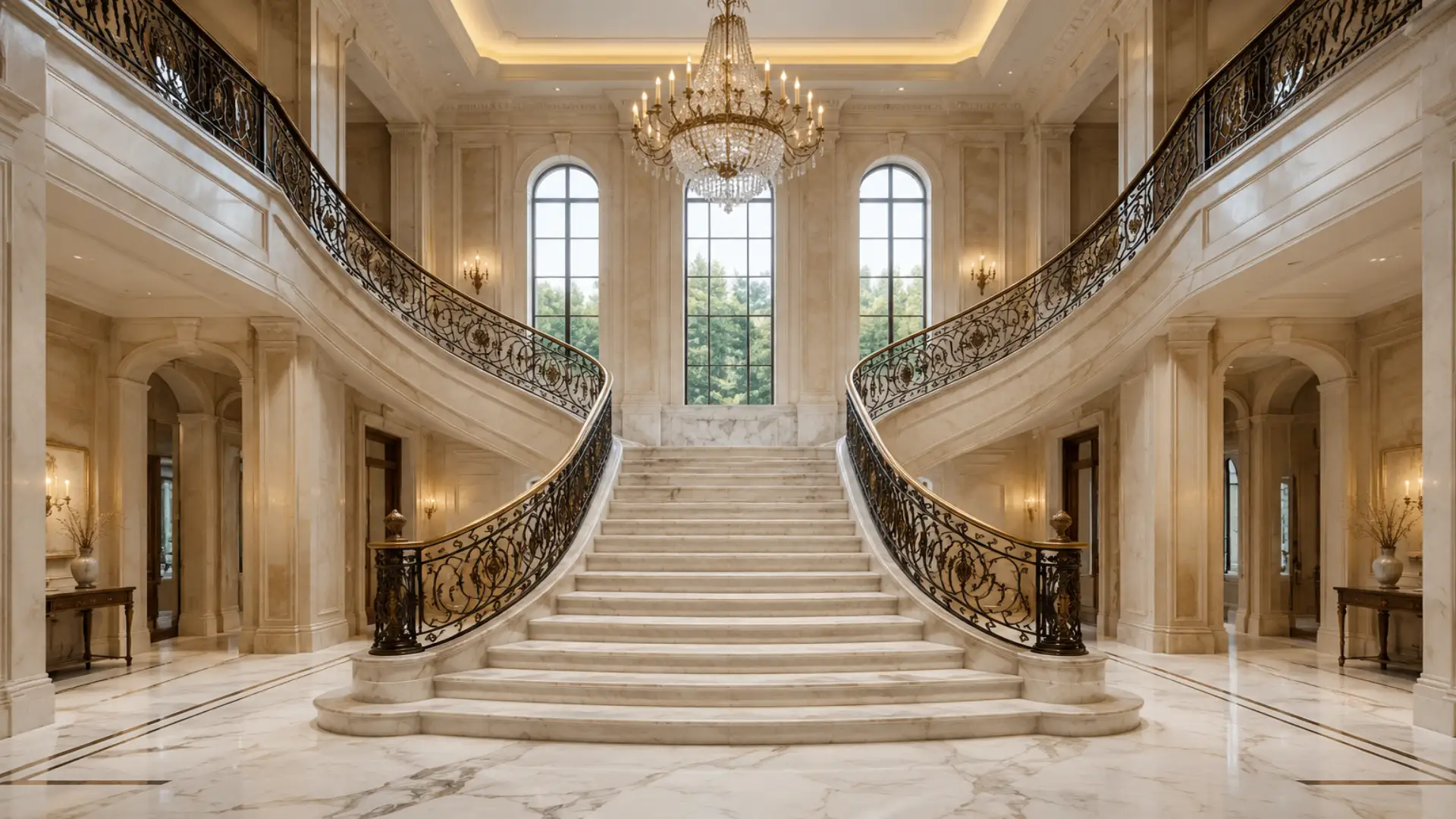
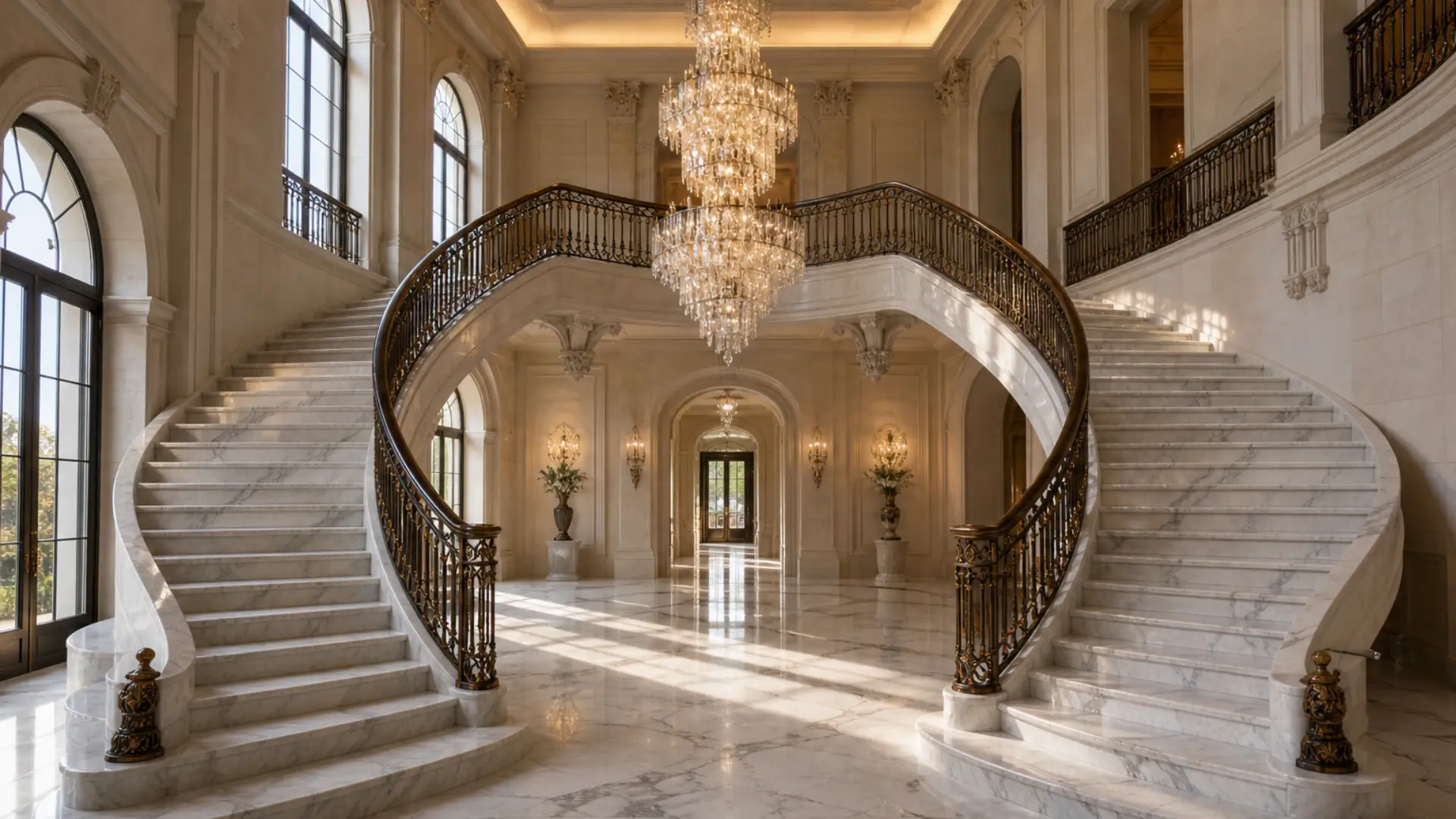
Some projects call for a single sweeping run, while others benefit from a split staircase that rises to a central landing before dividing into two mirrored flights. Both approaches can evoke European grandeur when they are scaled correctly and integrated into the architecture of the home.
The staircase should never feel applied or oversized for effect. Its proportions must relate to ceiling height, foyer width, surrounding openings, and sightlines from adjacent rooms.
Why Natural Stone Defines the Look
While wood staircases can interpret classical design beautifully, natural stone gives the grand European staircase style its most iconic expression. Marble, limestone, and travertine bring visual depth, permanence, and a sense of old-world craftsmanship that other materials rarely match.
Marble is especially effective in formal foyers because it reflects light, carries natural movement through veining, and reinforces the feeling of monumentality. Light-toned marble creates brightness and ceremonial elegance, while warmer limestone can soften the atmosphere and make a large stair feel more inviting.
Stone also performs an important symbolic role. It suggests that the architecture is meant to last. In luxury homes, that matters. A grand staircase should not feel decorative in a temporary sense. It should feel integral to the identity of the residence.
For homeowners who want material consistency, the stair can also coordinate beautifully with custom marble stairs, foyer flooring, wall cladding, or architectural columns.
Creating Palace-Style Drama Without Excess
One of the biggest misconceptions about classical staircases is that they must be overly ornate. In reality, the most elegant European-inspired staircases often rely on disciplined composition rather than visual overload.
The goal is grandeur, not clutter.
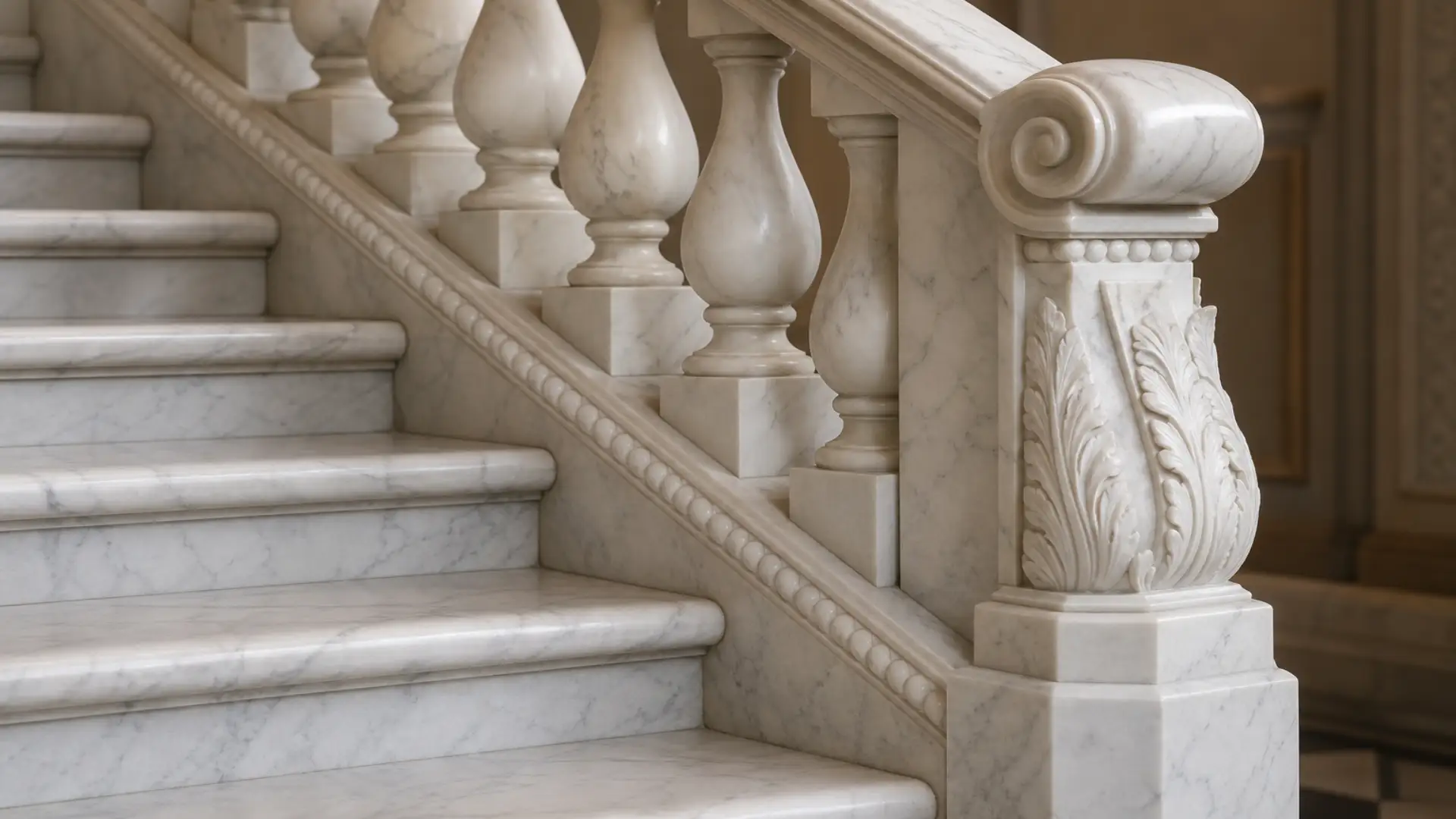
A successful design may use carved balusters, curved stone transitions, and decorative newel forms, but each element should support the whole. Excessive pattern, too many competing materials, or heavy-handed ornament can weaken the architectural clarity of the space.
Instead, palace-style drama is best achieved through:
- Strong axial planning
- Clear symmetry
- Consistent stone detailing
- Large-scale proportions
- Refined balustrade design
- Cohesive lighting
- A restrained but luxurious palette
This is where expert stone fabrication becomes critical. Curved stair geometry, shaped risers, thickened edges, and large-format landings require technical precision. What appears effortless in a finished foyer is usually the result of deep coordination between designer, fabricator, and installer.
Designing the Staircase as Part of the Foyer
The staircase should be conceived together with the foyer, not after the floor plan is finalized. In classical homes, the entry sequence is ceremonial. The relationship between the front door, chandelier, flooring pattern, ceiling treatment, and staircase geometry must feel intentional.
A grand stair often works best when it is aligned with a central axis and supported by architectural framing such as arches, niches, columns, or paneled walls. The surrounding space should allow the stair to breathe. If furniture, artwork, and lighting compete with it too aggressively, the composition loses its clarity.
Designers should also consider how the staircase appears from multiple perspectives:
- From the front entry
- From the upper landing
- From adjoining formal rooms
- From the chandelier viewpoint
- From evening lighting conditions
These sightlines determine where the stair feels majestic and where additional refinement may be needed.
For homes pursuing a complete classical language, the stair may connect visually with other stone focal points such as fireplace mantels or bespoke artistic marble elements.
Balustrades, Edges, and Detail Language
In the grand European staircase style, the balustrade is not a secondary feature. It is one of the most expressive parts of the composition. Stone balusters, wrought iron railings, or mixed-material solutions can all work, depending on the desired level of formality.
Stone balustrades feel especially monumental and are ideal for homes that want a strong classical presence. Wrought iron introduces elegance and visual openness, particularly when paired with marble treads and sculpted landings. Bronze or patinated finishes can add warmth and historical character.
Edge profiles also shape the overall tone. A thicker, more classical tread edge can suggest solidity and permanence, while gently rounded or molded profiles create softness and refinement. These details should relate to the home’s broader architectural vocabulary rather than being chosen in isolation.
Luxury Means Craftsmanship, Not Just Scale
A large staircase alone does not create luxury. Craftsmanship does.
The alignment of each tread, the continuity of veining, the precision of curved cuts, and the quality of stone finishing all influence whether the staircase feels truly elevated. In a luxury residence, the difference between “big” and “grand” is almost always found in execution.
That is why early collaboration matters. The staircase should be engineered, templated, fabricated, and installed with the same level of care as a custom façade or a hand-finished mantel. Technical resources from the Natural Stone Institute can also help guide best practices for natural stone design and installation.
Conclusion
The grand European staircase style continues to resonate because it captures something timeless: the desire for a home to feel significant from the very first step inside. With the right proportions, material palette, and fabrication quality, a palace-inspired staircase can transform a foyer into a lasting architectural statement.
For homeowners and designers in the conceptual phase, this is the moment to think beyond function. A staircase is not only a path between floors. In the right home, it becomes the heart of the arrival experience.
If you are planning a formal foyer and want a staircase defined by classical proportion, natural stone, and custom craftsmanship, Marvelous Marble can help bring that vision to life. Contact Marvelous Marble to discuss your custom staircase project.
In luxury residential design, few architectural elements create a stronger first impression than a grand staircase. Long associated with European palaces, historic manors, and formal estates, this staircase style continues to appeal to homeowners who want their entrance sequence to feel timeless, refined, and memorable. Today, the grand European staircase style is being reinterpreted for private residences that value both classical beauty and custom craftsmanship.
For high-net-worth homeowners and interior designers in the conceptual phase, this style offers more than visual drama. It establishes a sense of arrival. It turns the foyer into an architectural experience rather than a simple circulation space. And when executed in natural stone, it carries the permanence and prestige that define true luxury.
Why This Style Endures
The appeal of the grand European staircase style lies in its ability to communicate status, grace, and architectural order. Unlike trend-driven stair designs that may feel temporary, a classical staircase is rooted in proportion, symmetry, and material richness. These principles have remained desirable for centuries because they create spaces that feel balanced and dignified.
In a well-designed home, the staircase often becomes the visual anchor of the foyer. It frames the volume of the room, directs movement, and immediately sets the tone for the rest of the interior. A sweeping stair in marble or limestone signals that the home values craftsmanship, scale, and enduring design language.
This is especially important in large residences where the entrance must do more than connect levels. It must create presence.
The Hallmarks of a Grand European Staircase
A palace-inspired staircase is not defined by size alone. Its impact comes from the relationship between form, proportion, and detail.
Key features often include:
- A sweeping or bifurcated layout
- Broad, generous treads
- Balanced symmetry
- Sculptural balustrades
- Prominent landings
- Carved stone details or classical moldings
- Rich material continuity between stair, floor, and foyer
- A staircase positioned as the centerpiece of the entry
Some projects call for a single sweeping run, while others benefit from a split staircase that rises to a central landing before dividing into two mirrored flights. Both approaches can evoke European grandeur when they are scaled correctly and integrated into the architecture of the home.
The staircase should never feel applied or oversized for effect. Its proportions must relate to ceiling height, foyer width, surrounding openings, and sightlines from adjacent rooms.
Why Natural Stone Defines the Look
While wood staircases can interpret classical design beautifully, natural stone gives the grand European staircase style its most iconic expression. Marble, limestone, and travertine bring visual depth, permanence, and a sense of old-world craftsmanship that other materials rarely match.
Marble is especially effective in formal foyers because it reflects light, carries natural movement through veining, and reinforces the feeling of monumentality. Light-toned marble creates brightness and ceremonial elegance, while warmer limestone can soften the atmosphere and make a large stair feel more inviting.
Stone also performs an important symbolic role. It suggests that the architecture is meant to last. In luxury homes, that matters. A grand staircase should not feel decorative in a temporary sense. It should feel integral to the identity of the residence.
For homeowners who want material consistency, the stair can also coordinate beautifully with custom marble stairs, foyer flooring, wall cladding, or architectural columns.
Creating Palace-Style Drama Without Excess
One of the biggest misconceptions about classical staircases is that they must be overly ornate. In reality, the most elegant European-inspired staircases often rely on disciplined composition rather than visual overload.
The goal is grandeur, not clutter.
A successful design may use carved balusters, curved stone transitions, and decorative newel forms, but each element should support the whole. Excessive pattern, too many competing materials, or heavy-handed ornament can weaken the architectural clarity of the space.
Instead, palace-style drama is best achieved through:
- Strong axial planning
- Clear symmetry
- Consistent stone detailing
- Large-scale proportions
- Refined balustrade design
- Cohesive lighting
- A restrained but luxurious palette
This is where expert stone fabrication becomes critical. Curved stair geometry, shaped risers, thickened edges, and large-format landings require technical precision. What appears effortless in a finished foyer is usually the result of deep coordination between designer, fabricator, and installer.
Designing the Staircase as Part of the Foyer
The staircase should be conceived together with the foyer, not after the floor plan is finalized. In classical homes, the entry sequence is ceremonial. The relationship between the front door, chandelier, flooring pattern, ceiling treatment, and staircase geometry must feel intentional.
A grand stair often works best when it is aligned with a central axis and supported by architectural framing such as arches, niches, columns, or paneled walls. The surrounding space should allow the stair to breathe. If furniture, artwork, and lighting compete with it too aggressively, the composition loses its clarity.
Designers should also consider how the staircase appears from multiple perspectives:
- From the front entry
- From the upper landing
- From adjoining formal rooms
- From the chandelier viewpoint
- From evening lighting conditions
These sightlines determine where the stair feels majestic and where additional refinement may be needed.
For homes pursuing a complete classical language, the stair may connect visually with other stone focal points such as fireplace mantels or bespoke artistic marble elements.
Balustrades, Edges, and Detail Language
In the grand European staircase style, the balustrade is not a secondary feature. It is one of the most expressive parts of the composition. Stone balusters, wrought iron railings, or mixed-material solutions can all work, depending on the desired level of formality.
Stone balustrades feel especially monumental and are ideal for homes that want a strong classical presence. Wrought iron introduces elegance and visual openness, particularly when paired with marble treads and sculpted landings. Bronze or patinated finishes can add warmth and historical character.
Edge profiles also shape the overall tone. A thicker, more classical tread edge can suggest solidity and permanence, while gently rounded or molded profiles create softness and refinement. These details should relate to the home’s broader architectural vocabulary rather than being chosen in isolation.
Luxury Means Craftsmanship, Not Just Scale
A large staircase alone does not create luxury. Craftsmanship does.
The alignment of each tread, the continuity of veining, the precision of curved cuts, and the quality of stone finishing all influence whether the staircase feels truly elevated. In a luxury residence, the difference between “big” and “grand” is almost always found in execution.
That is why early collaboration matters. The staircase should be engineered, templated, fabricated, and installed with the same level of care as a custom façade or a hand-finished mantel. Technical resources from the Natural Stone Institute can also help guide best practices for natural stone design and installation.
Conclusion
The grand European staircase style continues to resonate because it captures something timeless: the desire for a home to feel significant from the very first step inside. With the right proportions, material palette, and fabrication quality, a palace-inspired staircase can transform a foyer into a lasting architectural statement.
For homeowners and designers in the conceptual phase, this is the moment to think beyond function. A staircase is not only a path between floors. In the right home, it becomes the heart of the arrival experience.
If you are planning a formal foyer and want a staircase defined by classical proportion, natural stone, and custom craftsmanship, Marvelous Marble can help bring that vision to life. Contact Marvelous Marble to discuss your custom staircase project.